Skip to content
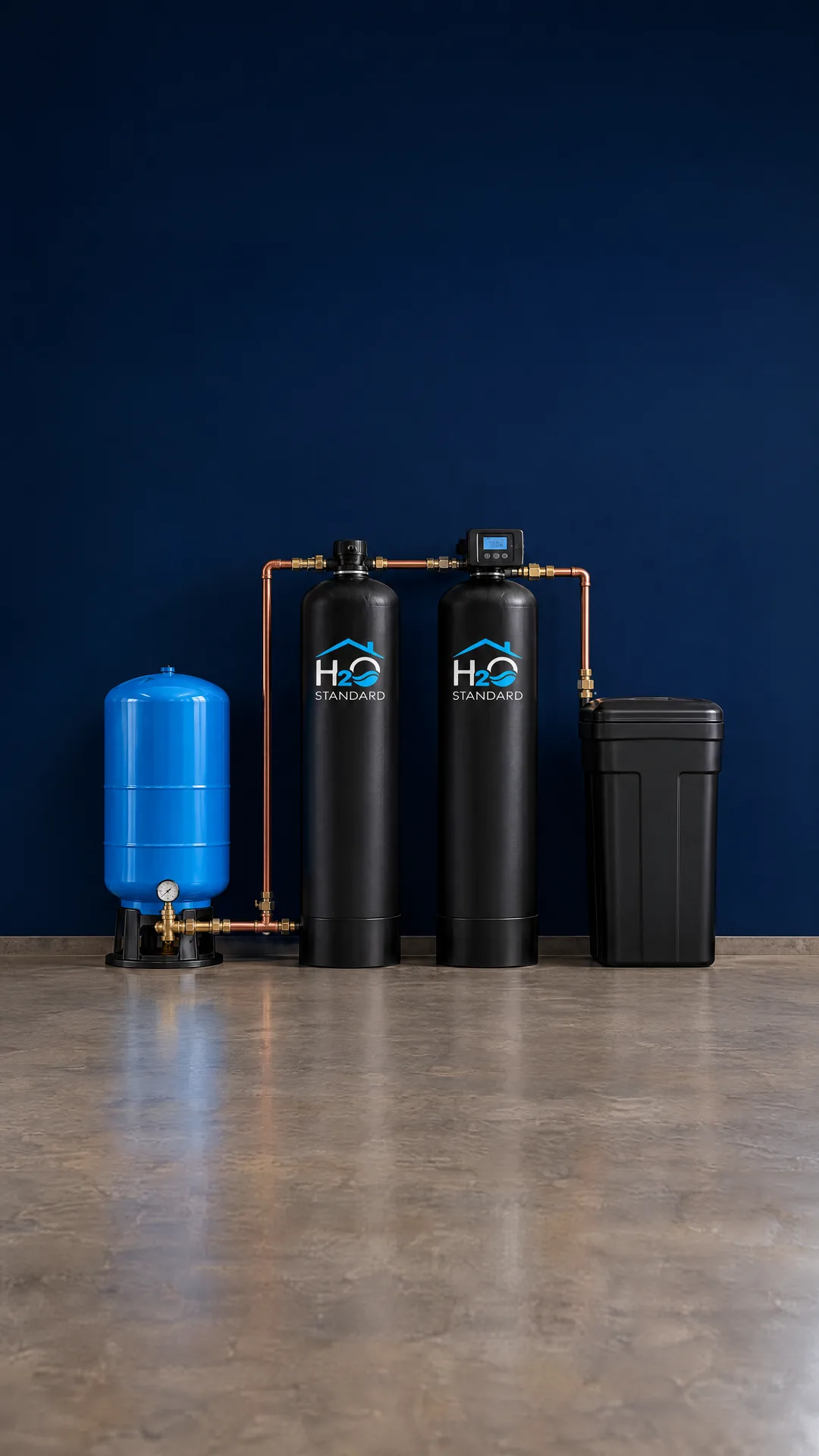
A whole-house water filter: a carbon tank and a sediment filter housing

Whole house water filter: no more chlorine taste or smell at any tap

Clean water in every shower, sink and appliance.

  • Whole-home
  • Licensed install
  • 30-day money-back guarantee

Want the answer for your home?

Tell us your ZIP code and a rep calls you within 5 minutes to answer every question. No pressure, no sales visit.

You're probably on this page because:

  • Your tap water smells like a swimming pool
  • Your skin and hair feel dry and itchy after every shower
  • Your water sometimes looks cloudy or gritty

That's your city's disinfectant. A whole-house filter takes it out at every tap.

A woman in a bathrobe scratching dry, itchy skin on her arm after a shower, with hard water spots on the shower glass behind her
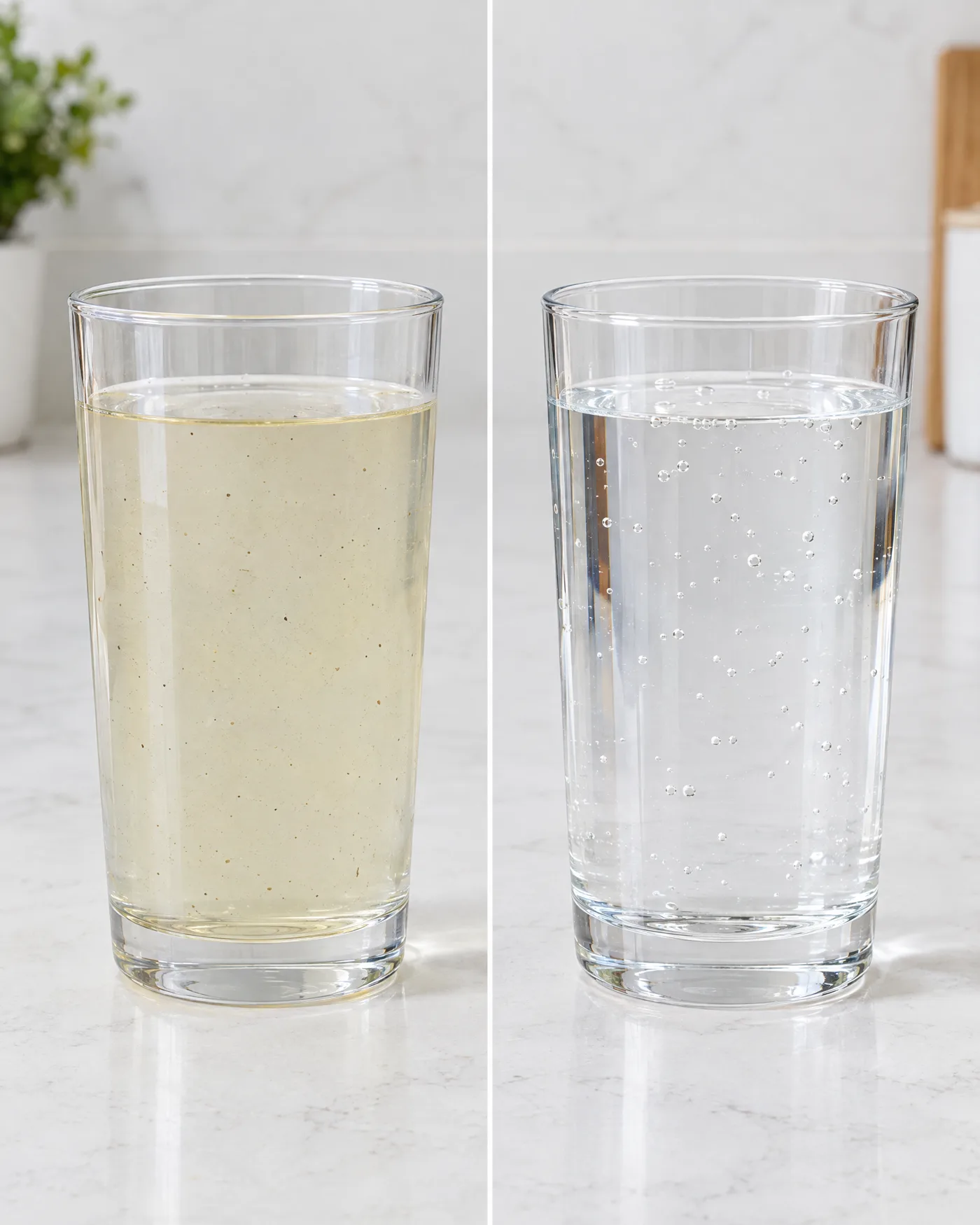
Two glasses side by side: cloudy tap water with specks, and clear reverse osmosis water
BeforeAfter

Your city water, by the numbers

  • 8 of the 14 cities we serve use chloramine to disinfect. It's harder to remove than chlorine, so a basic carbon filter isn't enough.
  • 71.3 ppb: disinfection byproducts in West Palm Beach in 2023, against a federal limit of 80.
  • Over 40% of people think their water affects their skin and hair.

Sources: city water reports (see the site map's city water data); City of West Palm Beach 2023 Water Quality Report; Leaf Home consumer water survey.

Filter, softener or both?

  • Filter: chlorine, sediment, taste
  • Softener: hardness, spots, scale

Most city water needs both. That's our City Water System, $2,950 installed.

Our whole-house filters

  • H2O-MU110UF Complete Kit
  • Cyclonic Action System
  • Well water: whole-house filter and iron filter

Don't ask if it pays for itself. Ask how many times.

Soft water protects your water heater, cuts soap costs and saves your appliances. Every year.

People at home
Water heater
Bottled water a week
0 cases
Appliances that use water

Email me my savings report

Get my price

Over 10 years, the City Water System pays for itself

1.4times

Every year

$414

Over 10 years

$4,136

Water heater energy
$130
Detergent and cleaning
$144
Appliances and fixtures
$140
Bottled water (with RO)
$0

An estimate, not a guarantee. Your numbers depend on your water, your home and your habits. Enter your ZIP code to use your local hardness; until then it assumes 10 grains.

Sources: Water heater efficiency: WQRF and Battelle (gas tank heaters lost up to 48% efficiency on hard water; the calculator uses a conservative middle value). Detergent: WQRF laundry and dishwasher studies (about 30% less at 10 gpg, nearly 70% less at 25 gpg). Fixtures: Battelle (low-flow shower heads clogged in about 18 months on hard water). Appliance figures are our own conservative estimate until customer data replaces them.

Every install comes with

  • Licensed local plumber install
  • Before-and-after water test
  • 30-day money-back guarantee on the system
  • Warranty: manufacturer warranty on the equipment, plus 1 year on labor
  • Filter subscription option: new filters every 6 months

The H2O Standard Vs. The Usual Options

Most homeowners end up choosing between an in-home dealer and a big-box DIY kit. Here's how they stack up, in our honest opinion.

What mattersThe H2O StandardA water treatment salesman pitching a couple at their kitchen tableIn-home dealerA homeowner reading the side of a boxed water softener in a store aisleBig-box DIY
Price you can see before anyone visitsOne flat priceQuoted at your kitchen tableBox price only
No sales pitch in your living roomOften a 2 to 3 hour visit
Installed by a licensed local plumberTheir own crewYou do it
Sized to your water and householdFrom your ZIP's water reportAfter their in-home testGuesswork
Softener, carbon, RO and remineralization togetherOne priceUsually sold separatelyBought one by one
Equipment straight from the sourceMaster distributorDealer markupRetail brands
A water expert to answer questionsBefore and after you buyThe salesperson
30-day money-back guaranteeRarelyStore return policy

Our Whole-House Filters

Life with it vs. without

Without It

  • Pool smell at every tap
  • Dry, itchy skin after showers
  • Cloudy or gritty water
  • Buying and hauling bottled water

With It

  • Clean-smelling water everywhere
  • Showers without chlorine
  • Clear water at every faucet
  • Clean water from your own faucet

How we work, start to finish

  1. 1

    You reach out or book online

  2. 2

    A rep calls you, usually within 5 minutes, to confirm your system and answer questions

  3. 3

    We schedule a licensed local plumber, usually within a week

  4. 4

    Install day: a few hours, plus a before-and-after water test

  5. 5

    After that: new filters every 6 months if you subscribe

Our Honest Take

The H2O Standard water team, 20+ years in water treatment

Will it actually save you money?

If your city uses chloramine, which more of them do every year, a whole-house filter protects everything downstream: your softener resin, your water heater, your shower and your skin. You stop buying bottled water and shower filters for every bathroom. If your water has nothing to remove, though, there's nothing to save, so check your water report first.

How it works

A whole-house filter treats water where it enters your home, so every tap, shower and appliance gets filtered water. For city water, catalytic carbon is the workhorse: it removes chlorine and breaks down chloramine, along with tastes and odors. Sediment filtration can go in front if your water carries grit.

What most people get wrong

They assume all carbon filters are the same. Standard carbon handles chlorine well but struggles with chloramine, and many cities have switched to chloramine because it lasts longer in the pipes. A filter built for chlorine on a chloramine city is a filter that's quietly not working.

What we do instead

We check your city's disinfectant before we recommend anything, and we use catalytic carbon so chloramine is covered. Whatever you buy, ask the seller: is it catalytic, how many cubic feet, and what flow does it handle? Ours is catalytic.

Chloramine changes the rules for whole-house filters

We've been wholesaling filtration equipment to water companies for years and building our own with our manufacturers. Here's what we've seen work.

A lot of whole-house filters are built for chlorine. That's a problem, because many cities, including 8 of the 14 we serve, use chloramine instead. Chloramine is chlorine bonded to ammonia, and it lasts longer in the pipes. It's also much harder to filter out. Standard activated carbon removes chlorine quickly but works on chloramine slowly, so a lot of it can slip through.

What actually works is catalytic carbon, a carbon made to break down chloramine, with enough of it in the tank that the water spends real time in contact with it. That's why tank size and flow rate matter as much as the filter type.

Three questions to ask any company quoting a whole-house filter:

  1. Is it catalytic carbon, and how many cubic feet? Ours is catalytic.
  2. What flow rate is it rated for, in gallons per minute? It needs to keep up with two showers and the dishwasher at once.
  3. Is it a cartridge you swap every few months, or a backwashing tank that cleans itself and lasts years?

Cartridge systems cost less up front but cost more over time, and they lose pressure as they clog. Backwashing tanks cost more to install and then mostly take care of themselves. For a whole house on chloramine, we almost always recommend the tank.
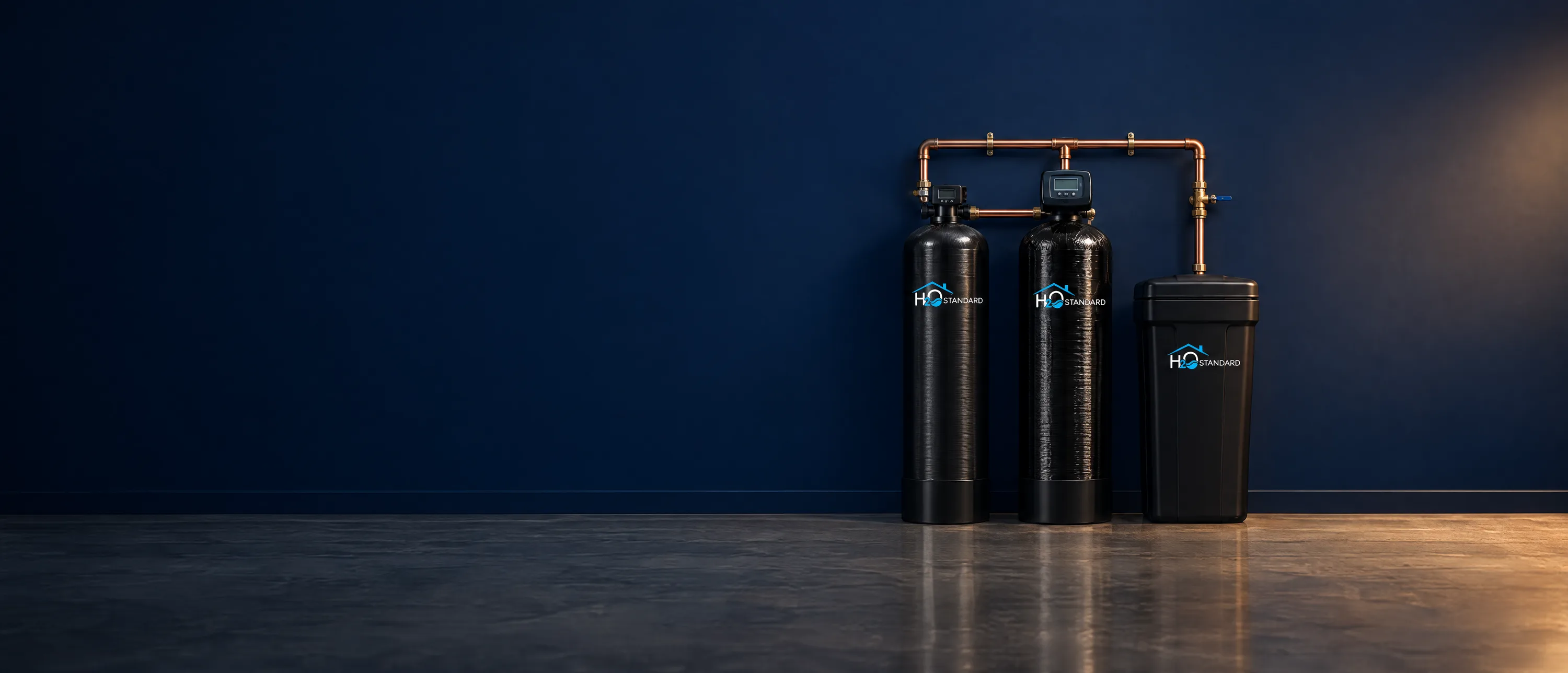
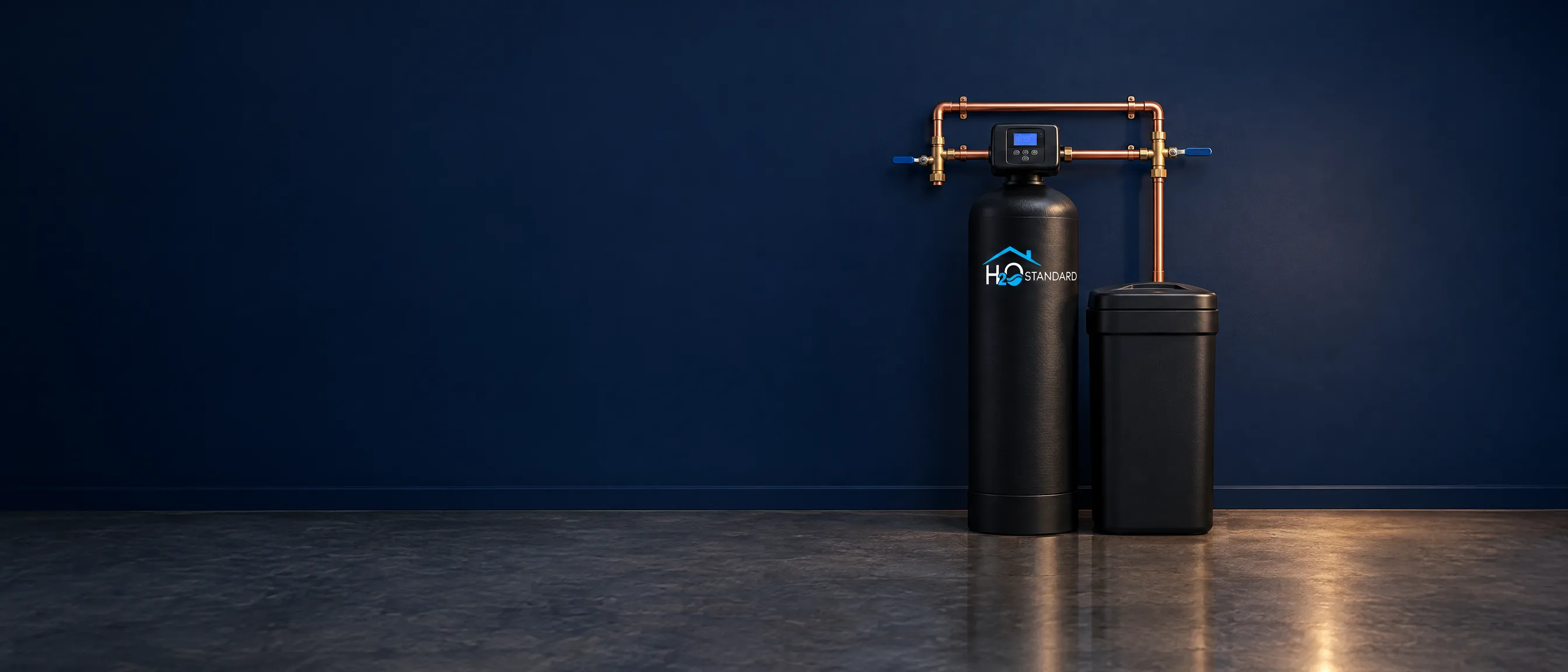
Filtration we build and stand behind

20+ years designing filtration, including for other water companies.

  • 20+ years in water
  • Our own patents
  • We supply other water companies
  • 15,000+ of systems sold
  • Licensed installers

Questions people ask

Do I need a whole-house water filter?

If your water smells or tastes like chlorine, or your skin and hair feel dry after showers, a whole-house filter fixes it at every tap. Your free water report shows what's in your water.

How do I choose a whole-house water filter?

Start with what's in your water. Chlorine and taste: carbon. Sediment: a sediment stage. Well water with iron or smell: a well water filter. Hardness: add a softener. We match it to your water report.

How often do you change a whole-house water filter?

Cartridge filters usually every 3 to 12 months. Backwashing tank systems like ours last years before the media needs replacing.

Will a whole-house filter lower my water pressure?

Not if it's sized right. We match the system to your home's water flow.

Whole-house filter or reverse osmosis?

Whole-house filters treat every tap. Reverse osmosis goes much further but only at the kitchen sink. Many homes do both: filtered water everywhere, purified water to drink.

Does a whole-house filter remove PFAS or lead?

Only filters certified for those contaminants. Most whole-house carbon isn't enough on its own; reverse osmosis at the kitchen sink is the reliable fix for drinking water.

Does a whole-house filter remove bacteria?

No. Bacteria need UV treatment, which is part of our Ultimate system.

Can I install a whole-house filter myself?

It goes on your main water line, so we recommend a licensed plumber. Our install price includes one.

Better water at every tap