


Whole house water filter for well water: clean water from your well, every tap
We test your well first, then match the fix.
Well water can carry iron, sediment, bacteria or a rotten-egg smell. We test your well first, then match a whole-house system that handles what's actually in it.
- Free well test
- Licensed install
- 30-day money-back guarantee
Want the answer for your well?
Get a free well test, or tell us your ZIP and a rep calls you within 5 minutes to answer every question.
You're probably on this page because:
- Your well water smells, stains or tastes off
- You tried a filter that didn't last
Well water is fixable when it's built from a test.
Well water, by the numbers
- About 43 million people in the US get water from private wells, and nobody tests a private well but its owner.
- Once a year: how often the CDC recommends testing a private well.
- Nearly 2 in 3 people have never had their water tested.
Sources: CDC private well guidance; WQA 2025 Consumer Insights via WCP.
What's probably in your well
- Iron: orange stains
- Manganese: black stains
- Sulfur: rotten-egg smell
- Sediment: cloudy water
- Bacteria: if your test shows it (UV fix)
Test, match, install
- Free test kit
- Lab results + expert follow-up
- Flat price
- Licensed install
Need softening too?
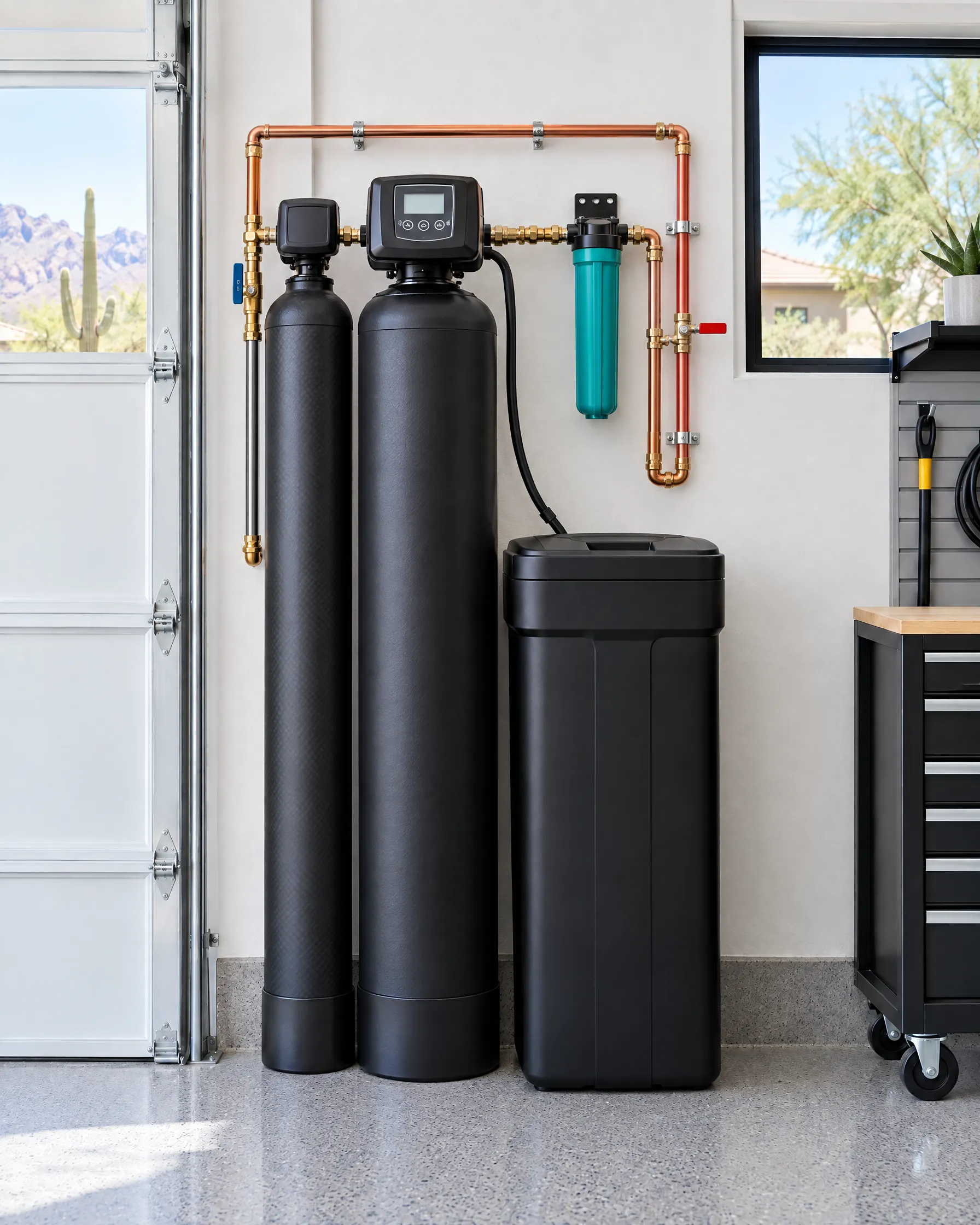
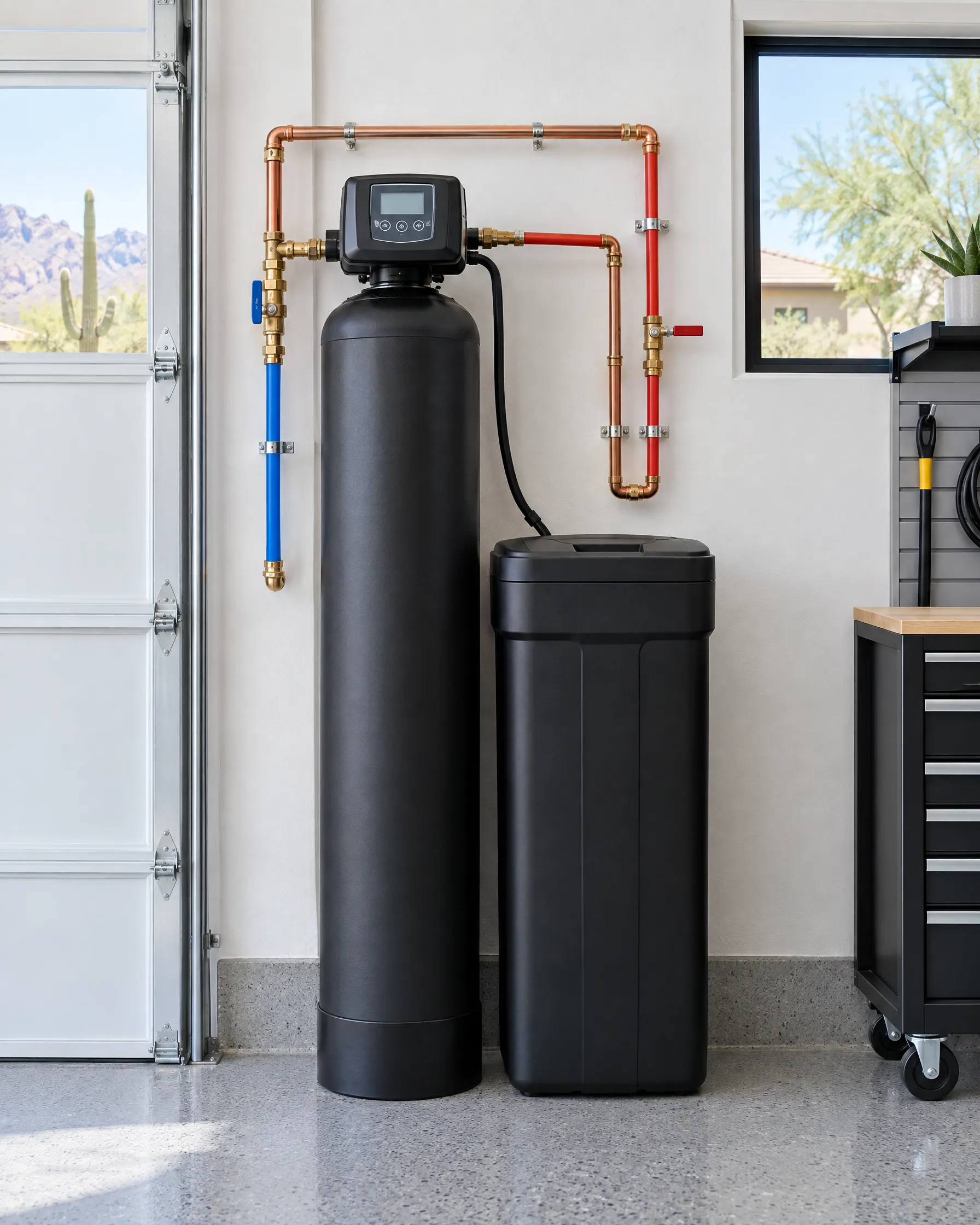
Our Well Water System filters, softens and adds RO. From $3,750 installed.
Don't ask if it pays for itself. Ask how many times.
Soft water protects your water heater, cuts soap costs and saves your appliances. Every year.
Savings in year one, and every year after
$414
- 10-year total
- $4,136
- Pays for the City Water System
- 1.4 times over 10 years
- Water heater energy
- $130
- Detergent and cleaning
- $144
- Appliances and fixtures
- $140
- Bottled water (with RO)
- $0
An estimate, not a guarantee. Your numbers depend on your water, your home and your habits. Enter your ZIP code to use your local hardness; until then it assumes 10 grains.
Sources: Water heater efficiency: WQRF and Battelle (gas tank heaters lost up to 48% efficiency on hard water; the calculator uses a conservative middle value). Detergent: WQRF laundry and dishwasher studies (about 30% less at 10 gpg, nearly 70% less at 25 gpg). Fixtures: Battelle (low-flow shower heads clogged in about 18 months on hard water). Appliance figures are our own conservative estimate until customer data replaces them.
Part of the Well Water System
$3,750 installed, with everything it takes to put it in.
Schedule a Call
Life with it vs. without
| Without it | With it |
|---|---|
| Stains and smell | Clean well water |
| Guessing | Built from your test |
How we work, start to finish
- 1
You reach out or book online
- 2
A rep calls you, usually within 5 minutes, to confirm your system and answer questions
- 3
We schedule a licensed local plumber, usually within a week
- 4
Install day: a few hours, plus a before-and-after water test
- 5
After that: new filters every 6 months if you subscribe
Our take
Why the order of the tanks matters on a well
After [thousands] of filtration systems sold, these are the questions customers ask us most:
Well water usually has more than one problem: sediment, iron, sulfur and hardness, and sometimes bacteria. Each needs its own treatment, and the order they're installed in decides whether the whole system works.
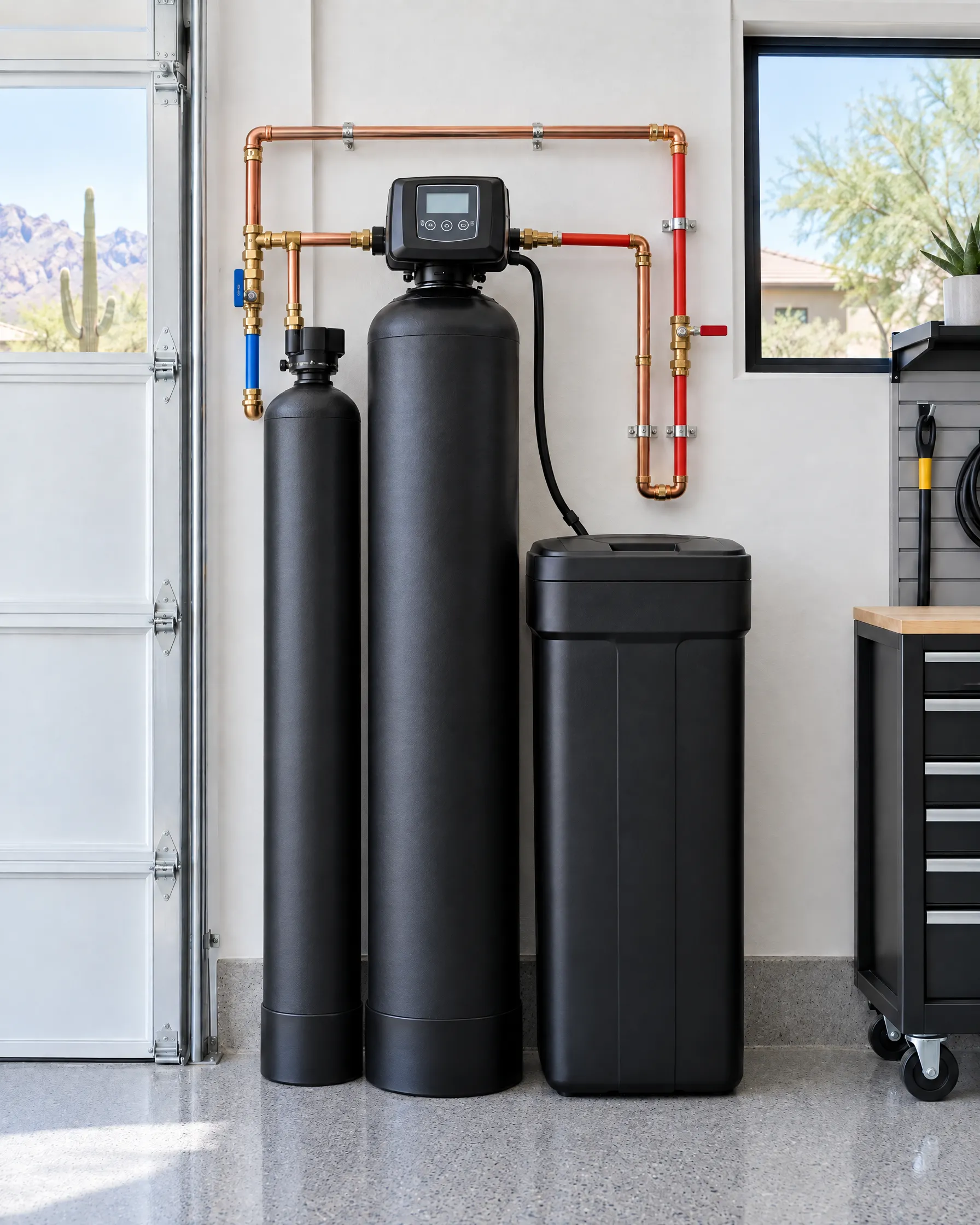
Here's the order we install in, and why. Sediment first, so sand and grit don't clog everything after it. Iron and sulfur next, because iron fouls softener resin fast, and a softener can't handle much of it. Softener after that, so it only has to deal with hardness. UV last, because UV light only works on clear water. Put UV before the iron filter and stained, cloudy water blocks the light.
Your well pump matters too. Backwashing filters need enough flow to clean themselves. If your pump can't deliver it, the filter never fully cleans out and stops working well. That's why we check your pump's flow before sizing anything.
This is the biggest reason well systems fail: someone sells a softener or a single filter without testing, and it can't handle the whole problem. We test first, then build the system in the right order for your well.
20+ years treating problem well water
Our own lab tests your sample.
- 20+ years in water
- Our own patents
- We supply other water companies
- [Thousands] of systems sold
- Licensed installers
Related Pages
Questions people ask
What's the best whole-house water filter for well water?
The one built for what's in your well. Iron needs an iron filter, sulfur smell needs oxidation, bacteria needs UV. That's why we test first instead of guessing.
How often should I test my well water?
The CDC recommends at least once a year. Test again if the taste, smell or color changes.
Can one system handle iron, sulfur and hardness?
Yes, with the right stages in the right order: an iron and sulfur filter first, then the softener. Our Well Water System is built that way.
Will it lower my water pressure?
It's sized to your well pump's flow, so you shouldn't notice.
Does it remove bacteria?
Only with UV. If your test shows bacteria, we add it and quote it before you book.
How much maintenance does it need?
The filter tank backwashes itself. You add salt to the softener and swap any cartridge filters on schedule.