Skip to content
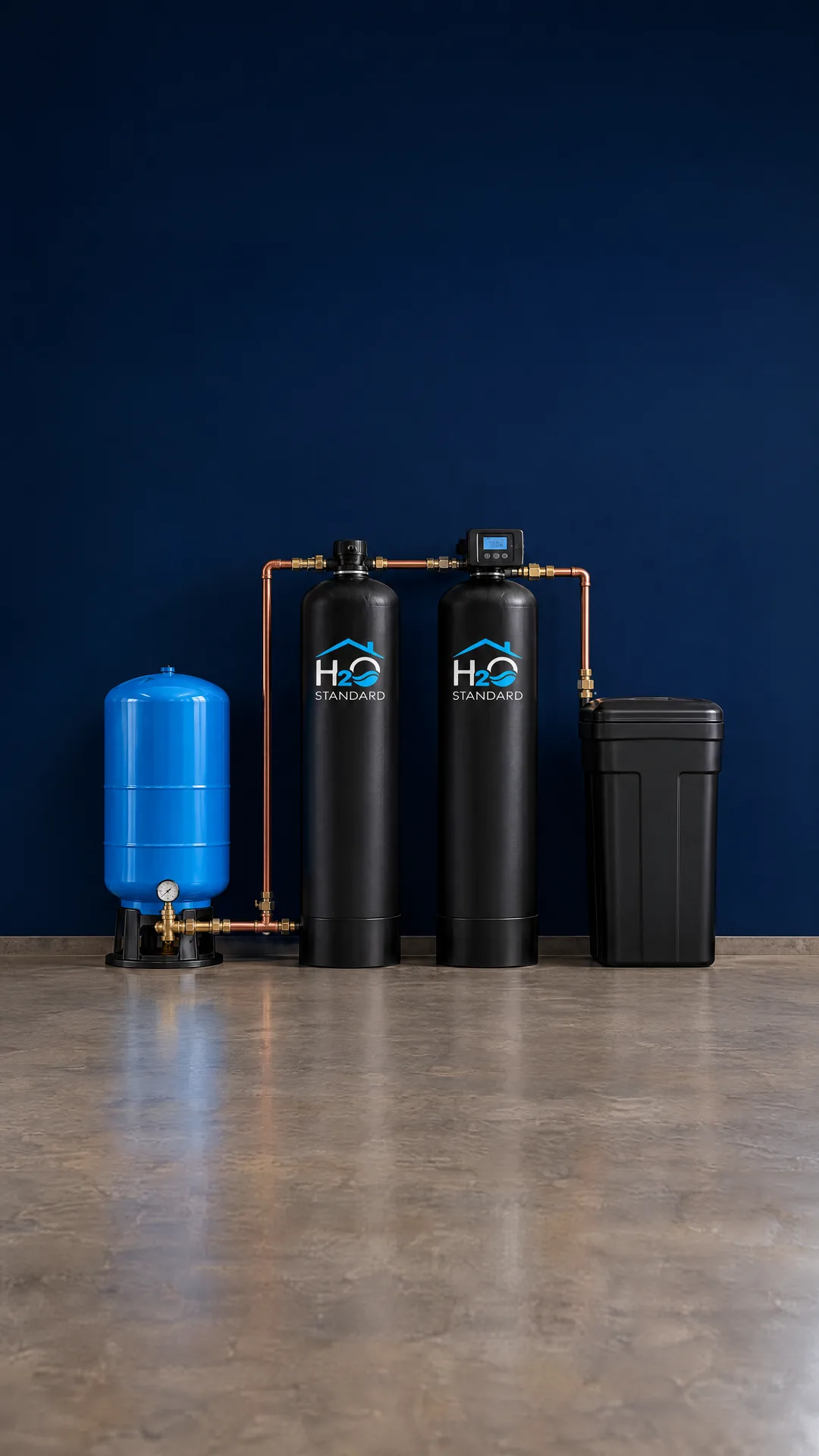
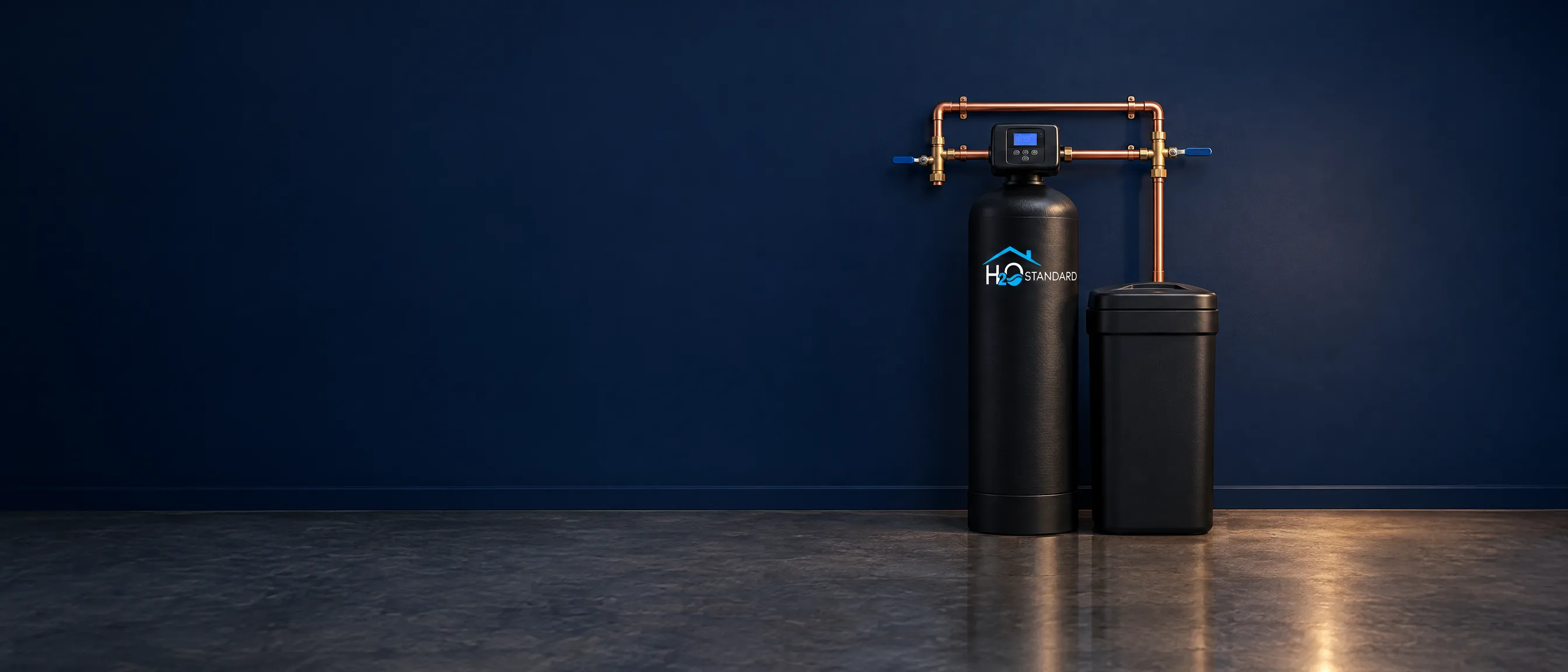
The H2O Standard well water system: a well pressure tank, an iron and sulfur filter, a softener and a brine tank against a navy wall

Iron filter for well water: no more orange stains

Iron out before it hits your sinks, tubs and laundry.

  • Free well test
  • Licensed install
  • 30-day money-back guarantee

Want the answer for your well?

Get a free well test, or tell us your ZIP and a rep calls you within 5 minutes to answer every question.

You're probably on this page because:

  • The orange stains come back no matter how much you scrub
  • Your laundry is turning yellow
  • Your water tastes metallic

That's iron. Here's how to get rid of it.

A woman in a bathrobe scratching dry, itchy skin on her arm after a shower, with hard water spots on the shower glass behind her
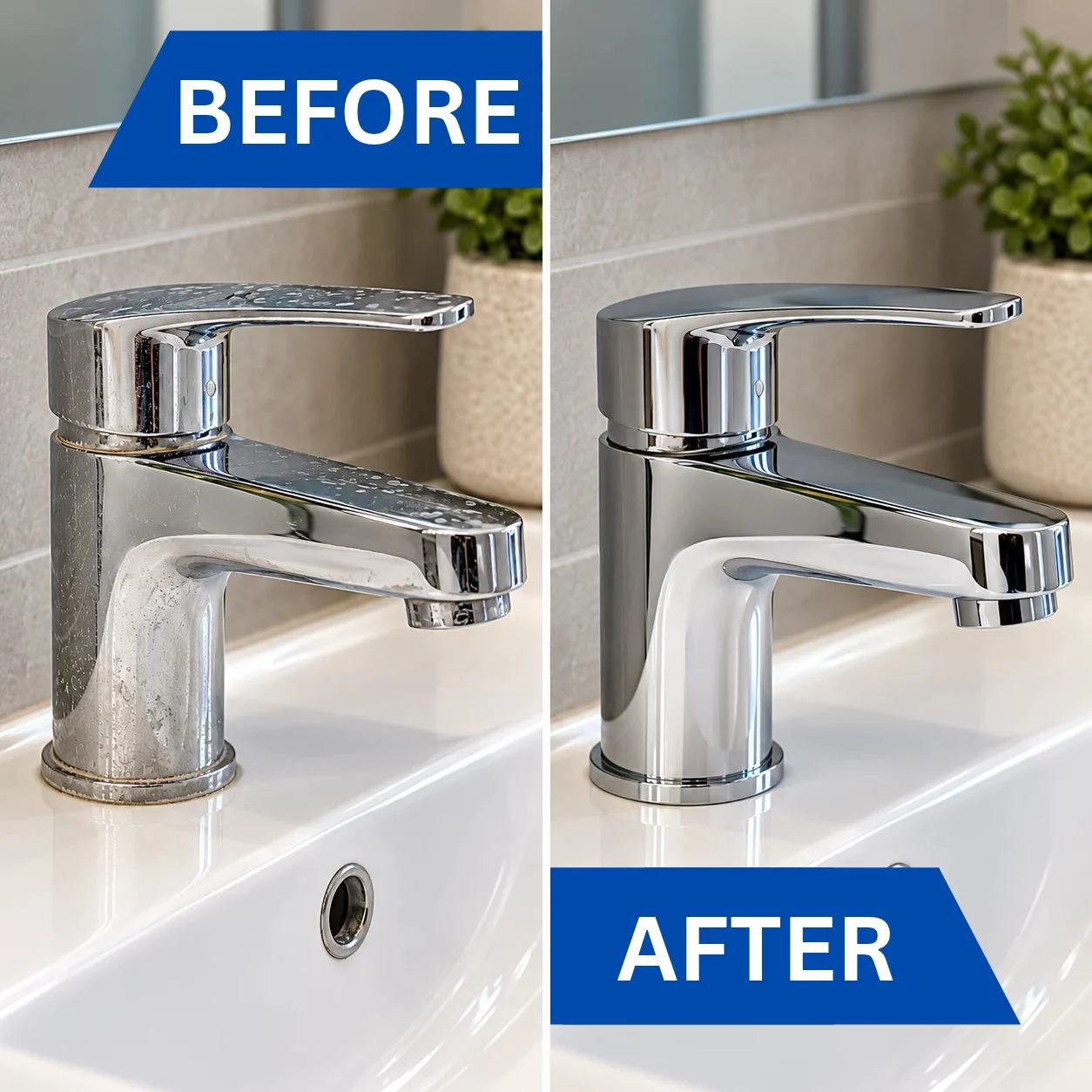
The same bathroom faucet before and after soft water: spotted with scale, then clean

Well water, by the numbers

  • About 43 million people in the US get water from private wells, and nobody tests a private well but its owner.
  • Once a year: how often the CDC recommends testing a private well.
  • Nearly 2 in 3 people have never had their water tested.

Sources: CDC private well guidance; WQA 2025 Consumer Insights via WCP.

Signs you have iron

  • Orange stains in sinks and toilets
  • Yellow laundry
  • Metallic taste
  • Black stains (manganese)

How an iron filter works

It traps the iron in the filter, then flushes it out on its own. We use Katalox Light media, straight from the manufacturer in Germany.

Don't ask if it pays for itself. Ask how many times.

Soft water protects your water heater, cuts soap costs and saves your appliances. Every year.

People at home
Water heater
Bottled water a week
0 cases
Appliances that use water

Email me my savings report

Get my price

Over 10 years, the Well Water System pays for itself

1.1times

Every year

$414

Over 10 years

$4,136

Water heater energy
$130
Detergent and cleaning
$144
Appliances and fixtures
$140
Bottled water (with RO)
$0

An estimate, not a guarantee. Your numbers depend on your water, your home and your habits. Enter your ZIP code to use your local hardness; until then it assumes 10 grains.

Sources: Water heater efficiency: WQRF and Battelle (gas tank heaters lost up to 48% efficiency on hard water; the calculator uses a conservative middle value). Detergent: WQRF laundry and dishwasher studies (about 30% less at 10 gpg, nearly 70% less at 25 gpg). Fixtures: Battelle (low-flow shower heads clogged in about 18 months on hard water). Appliance figures are our own conservative estimate until customer data replaces them.

The H2O Standard Vs. The Usual Options

Most homeowners end up choosing between an in-home dealer and a big-box DIY kit. Here's how they stack up, in our honest opinion.

What mattersThe H2O StandardA water treatment salesman pitching a couple at their kitchen tableIn-home dealerA homeowner reading the side of a boxed water softener in a store aisleBig-box DIY
Price you can see before anyone visitsOne flat priceQuoted at your kitchen tableBox price only
No sales pitch in your living roomOften a 2 to 3 hour visit
Installed by a licensed local plumberTheir own crewYou do it
Sized to your water and householdFrom your ZIP's water reportAfter their in-home testGuesswork
Softener, carbon, RO and remineralization togetherOne priceUsually sold separatelyBought one by one
Equipment straight from the sourceMaster distributorDealer markupRetail brands
A water expert to answer questionsBefore and after you buyThe salesperson
30-day money-back guaranteeRarelyStore return policy

Part of the Well Water System

$3,750 installed, with everything it takes to put it in.

See the Well Water System

Schedule a Call

Your details
Is this for a home or a business?

A few quick questions so your price is exact.Skip any you're not sure about.

Do you own the home?
Where does your water come from?
How many people live there?
What bothers you most? Pick any.
When are you looking to do this?

See the text message terms and privacy policy.

Life with it vs. without

Without It

  • Orange stains everywhere
  • A rotten-egg smell from the tap
  • A metallic taste in every glass
  • Not knowing what's in your well
  • Clogged fixtures and stained faucets

With It

  • Stain-free sinks and laundry
  • Water that smells like nothing at all
  • Water that tastes clean
  • Lab-tested water you can trust
  • Fixtures that stay clean and flowing

How we work, start to finish

  1. 1

    You reach out or book online

  2. 2

    A rep calls you, usually within 5 minutes, to confirm your system and answer questions

  3. 3

    We schedule a licensed local plumber, usually within a week

  4. 4

    Install day: a few hours, plus a before-and-after water test

  5. 5

    After that: new filters every 6 months if you subscribe

Our Honest Take

The H2O Standard water team, 20+ years in water treatment

Will it actually save you money?

If iron is staining your sinks, tubs and laundry, an iron filter saves you the cleaning products, the ruined clothes and the fixtures you'd otherwise replace. It also protects any softener downstream from iron fouling. Most people with iron problems spend more fighting the stains than they would on the filter.

How it works

Our iron filters use Katalox Light media from the manufacturer in Germany. As water passes through, dissolved iron is oxidized and trapped in the media bed, then backwashed out on a schedule so the media keeps working. It handles sulfur and manganese as well.

What most people get wrong

Not all iron is the same. Dissolved iron comes out of the tap clear and turns orange in the air; particle iron comes out already rusty; iron bacteria leaves a slimy residue. A filter that handles one type can struggle with another, which is why so many people buy a filter and still see stains.

What we do instead

We test first and identify the type and amount of iron before we size anything. Then a licensed plumber installs the filter in the right spot, ahead of the softener. That's the difference between a filter that works and one that just sits there.

Not all iron is the same

Working directly with our manufacturers, and holding our own patents, has taught us exactly where filters succeed and fail.

When we test well water, we're looking for three kinds of iron, because each one needs a different fix.

Clear-water iron (ferrous): the water comes out of the tap clear, then turns orange after it sits. It's dissolved in the water. An oxidizing iron filter handles it well. Red-water iron (ferric): the water is already cloudy or orange coming out of the tap. The iron is already in particles, so it needs good filtration. Iron bacteria: a slimy, reddish buildup in the toilet tank and a swampy smell. This needs the well disinfected first, or the filter just gets coated.

Manganese often comes along with iron and leaves black or brown stains instead of orange. Many iron filters handle both, but only if they're sized for it.

Two other numbers matter just as much: pH, because many iron filter media only work well in the right pH range, and the iron level in parts per million, which decides how big the filter needs to be. That's why our free well test checks more than just iron. Buying an iron filter without those numbers is guessing.
We've fixed iron water for 20+ years

Our lab checks your levels so the filter is sized right the first time.

  • 20+ years in water
  • Our own patents
  • We supply other water companies
  • 15,000+ of systems sold
  • Licensed installers

Questions people ask

How do I know if I need an iron filter?

Orange stains, metallic taste, or yellow laundry. A free well water test tells you exactly how much iron you have.

Can a water softener remove iron?

Small amounts of dissolved iron, yes. More than that fouls the softener resin, so you need a dedicated iron filter in front of it.

What's the difference between iron and manganese stains?

Iron leaves orange and rust-colored stains. Manganese leaves black or dark brown ones. Many iron filters handle both.

Does an iron filter remove sulfur smell?

Many do, depending on the media and setup. Your test shows if you need it.

How often does an iron filter need maintenance?

It backwashes itself automatically. The media lasts years before it needs replacing.

Will the stains I already have go away?

New stains stop. Existing ones need a good clean, but they won't come back.

Stop the stains for good