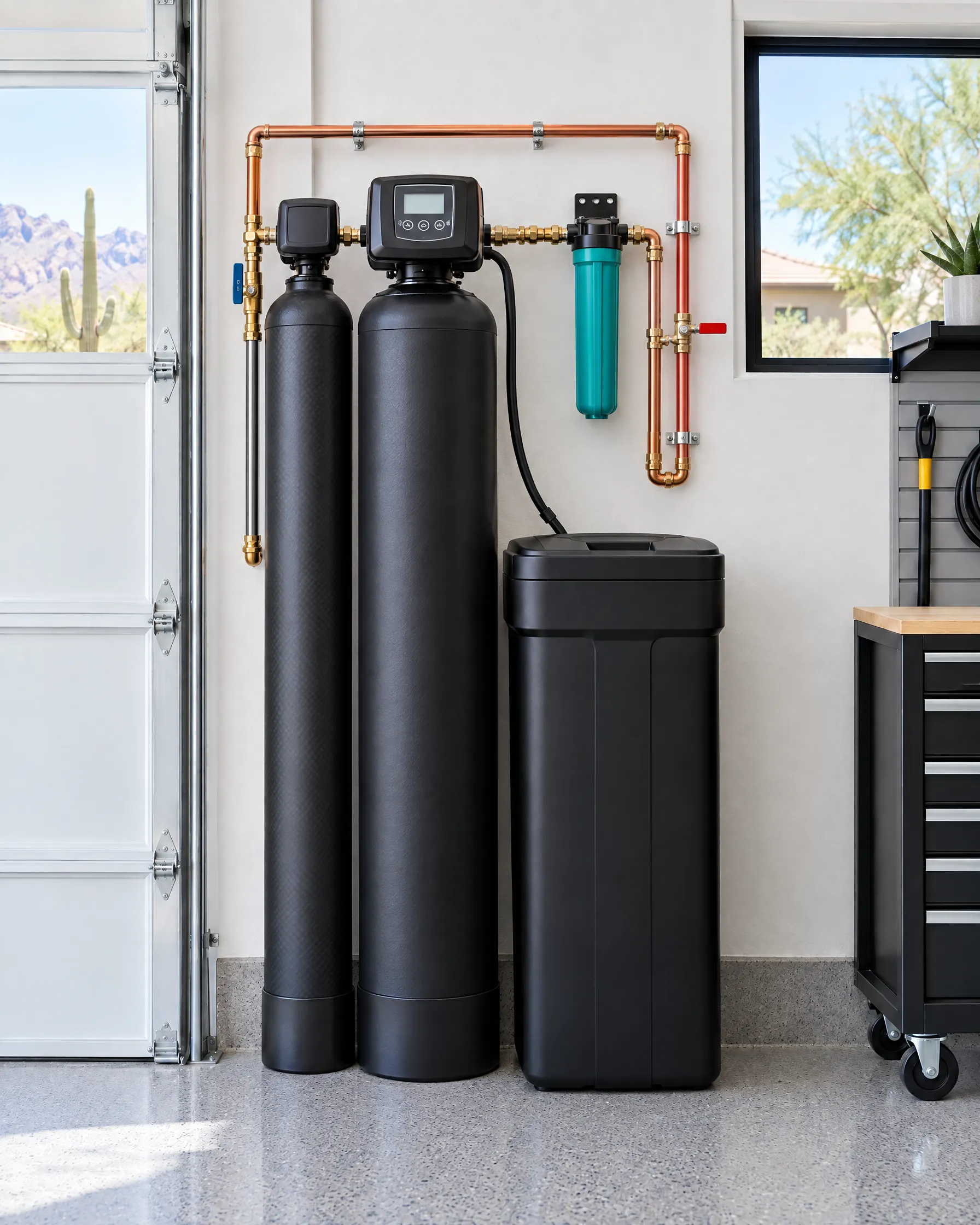
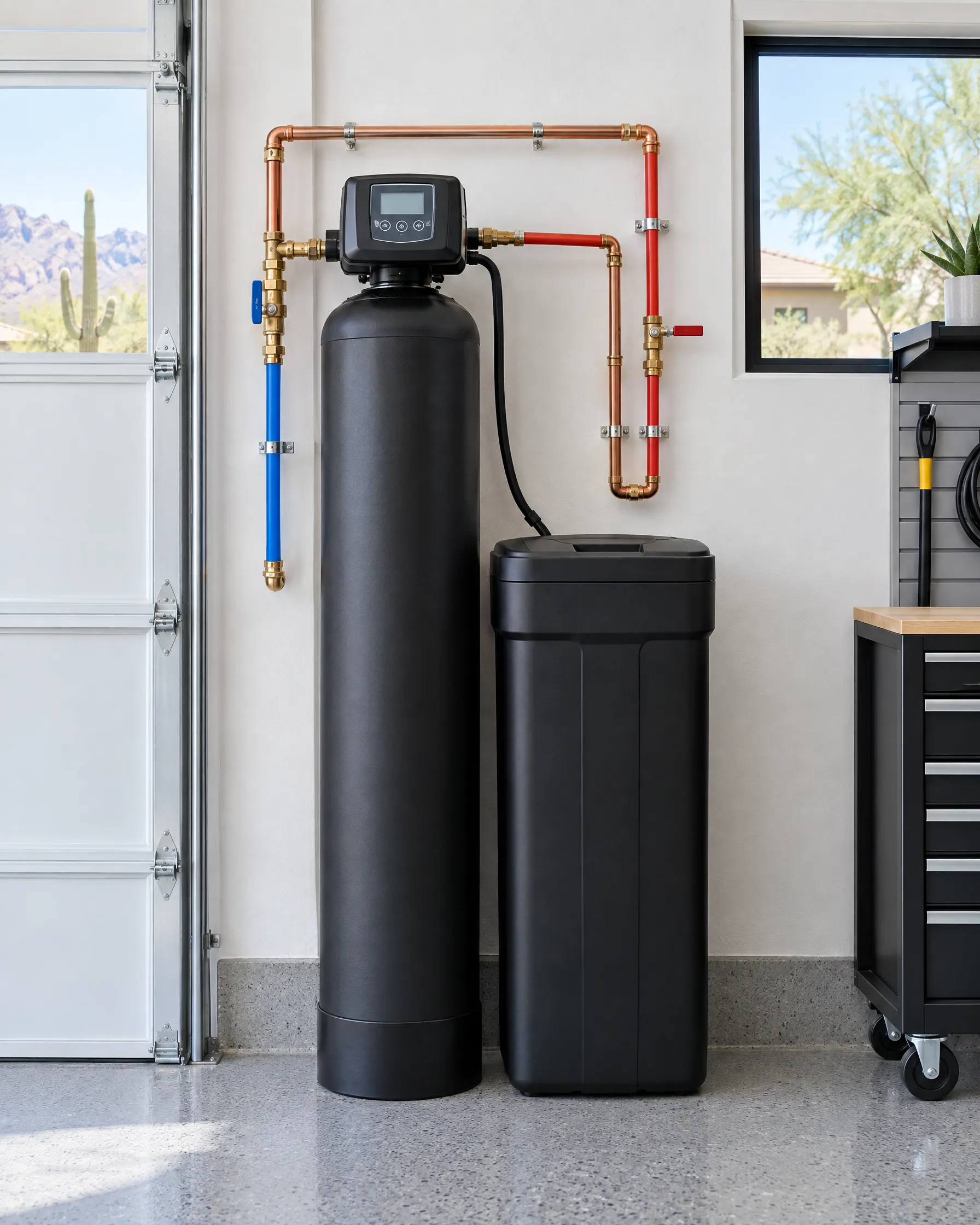
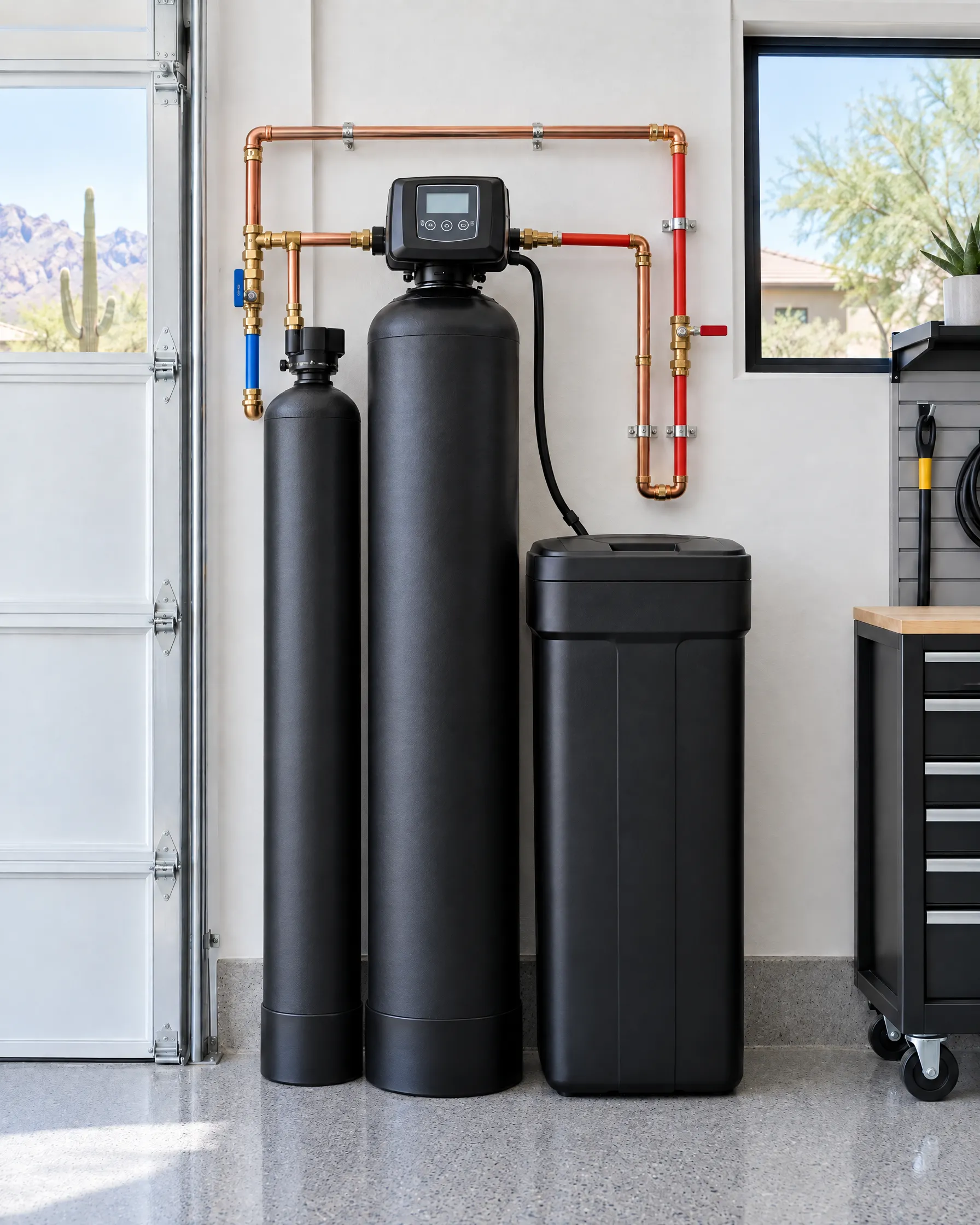


PFAS water filter: get forever chemicals out of your drinking water
See what's in your water, then fix it with a certified system.
PFAS, often called "forever chemicals," have been found in many US water supplies. See what's in your water and which systems are certified to reduce PFAS. [List only systems with PFAS certification.]
- Free water report
- Certified systems only
- 30-day money-back guarantee

Want the answer for your home?
Tell us your ZIP code and a rep calls you within 5 minutes to answer every question. No pressure, no sales visit.
You're probably on this page because:
- You heard about forever chemicals and you're worried
- You're not sure your filter removes PFAS
Here's how to know, and what actually works.
Drinking water, by the numbers
- 4 parts per trillion: the EPA's 2024 limit for PFOA and PFOS.
- 59% of people are concerned about their water quality.
Sources: EPA; WQA 2025 via WCP.
What are PFAS?
Man-made chemicals from nonstick pans, stain-proof fabric and firefighting foam.
They barely break down, so they're called forever chemicals.
What actually removes PFAS
- Reverse osmosis: the most reliable fix for drinking water (when certified)
- Some certified carbon filters: reduce certain PFAS
- Softeners: don't remove PFAS
- Boiling: doesn't help
Only list systems with PFAS certification [list].
Find out if your water has PFAS
Your free water report shows what your city reported for your ZIP.
Savings in year one, and every year after
$414
- 10-year total
- $4,136
- Pays for the City Water System
- 1.4 times over 10 years
- Water heater energy
- $130
- Detergent and cleaning
- $144
- Appliances and fixtures
- $140
- Bottled water (with RO)
- $0
An estimate, not a guarantee. Your numbers depend on your water, your home and your habits. Enter your ZIP code to use your local hardness; until then it assumes 10 grains.
Sources: Water heater efficiency: WQRF and Battelle (gas tank heaters lost up to 48% efficiency on hard water; the calculator uses a conservative middle value). Detergent: WQRF laundry and dishwasher studies (about 30% less at 10 gpg, nearly 70% less at 25 gpg). Fixtures: Battelle (low-flow shower heads clogged in about 18 months on hard water). Appliance figures are our own conservative estimate until customer data replaces them.
Part of the Ultimate Water Softener System
Priced on your call, with everything it takes to put it in.
Schedule a Call
Life with it vs. without
| Without it | With it |
|---|---|
| Guessing about PFAS | Knowing your numbers, and a certified fix |
Our take
How to read a PFAS claim without getting fooled
Working directly with our manufacturers, and holding our own patents, has taught us exactly where filters succeed and fail.
PFAS isn't one chemical. It's a family of thousands of man-made chemicals. In 2024, the EPA set drinking water limits for some of them, including 4 parts per trillion for PFOA and PFOS. That's an incredibly small amount, which tells you how seriously regulators take them.
Because PFAS is in the news, a lot of filters now say "reduces PFAS" on the box. Here's how to tell what's real:
Look for the certification, not the claim. A filter tested to NSF/ANSI 53 or 58 for PFOA and PFOS reduction has proven it in a lab. A box that says "removes PFAS" with no certification hasn't. Check which PFAS. Certifications list specific chemicals. Make sure PFOA and PFOS are on it. Check the capacity. Every filter stops working at some point. Certified filters list how many gallons they're tested for.
For most homes, the most reliable fix for drinking water is certified reverse osmosis at the kitchen sink. A whole-house carbon filter helps, but most aren't certified for PFAS on their own. And boiling makes it worse: PFAS doesn't boil off, so it concentrates as the water evaporates.
If your city publishes PFAS results, your free water report shows them. Miami-Dade's 2025 report, for example, showed PFOS up to 33 parts per trillion.
No fear-selling. Just your data.
We show you your local numbers and only recommend certified systems.
- 20+ years in water
- Our own patents
- We supply other water companies
- [Thousands] of systems sold
- Licensed installers
Written by [Name], [title], [20+] years in water treatment. Reviewed by [Licensed plumber name], license # [#]. Last updated [date]. Sources: listed under each "By the numbers" block and linked in the copy
Related Pages
Questions people ask
Does reverse osmosis remove PFAS?
Certified reverse osmosis systems reduce PFOA and PFOS. Look for systems certified to NSF/ANSI 58 for those claims.
Does a Brita filter remove PFAS?
Some pitcher filters are certified to reduce certain PFAS. Check the specific model's certification before you count on it.
Does boiling water remove PFAS?
No. Boiling can actually concentrate them as water evaporates.
Does a water softener remove PFAS?
No. Softeners remove hardness minerals, not chemicals like PFAS.
How do I know if my water has PFAS?
Start with your free water report by ZIP code, which shows what your utility has reported. Utilities are now testing for PFAS more widely.
Is a whole-house filter enough for PFAS?
Most whole-house carbon isn't enough on its own. For drinking water, certified reverse osmosis at the kitchen sink is the reliable fix.
Is bottled water free of PFAS?
Not always. Some bottled water has tested positive for PFAS too, which is one reason people switch to RO at home.