



Water softener installation in Miami, FL: what's really in your water
Very hard groundwater, chloramine, and PFAS in the city's own report.
- Licensed Miami plumbers
- Flat prices
- 30-day money-back guarantee
Want the answer for your home?
Tell us your ZIP code and a rep calls you within 5 minutes to answer every question. No pressure, no sales visit.
You're probably on this page because:
- There's scale on the faucets, even in a newer home
- Your water tastes like a pool
- You read about PFAS and you're worried about your kids' water
Here's what Miami's own water report says.
What hard water looks like
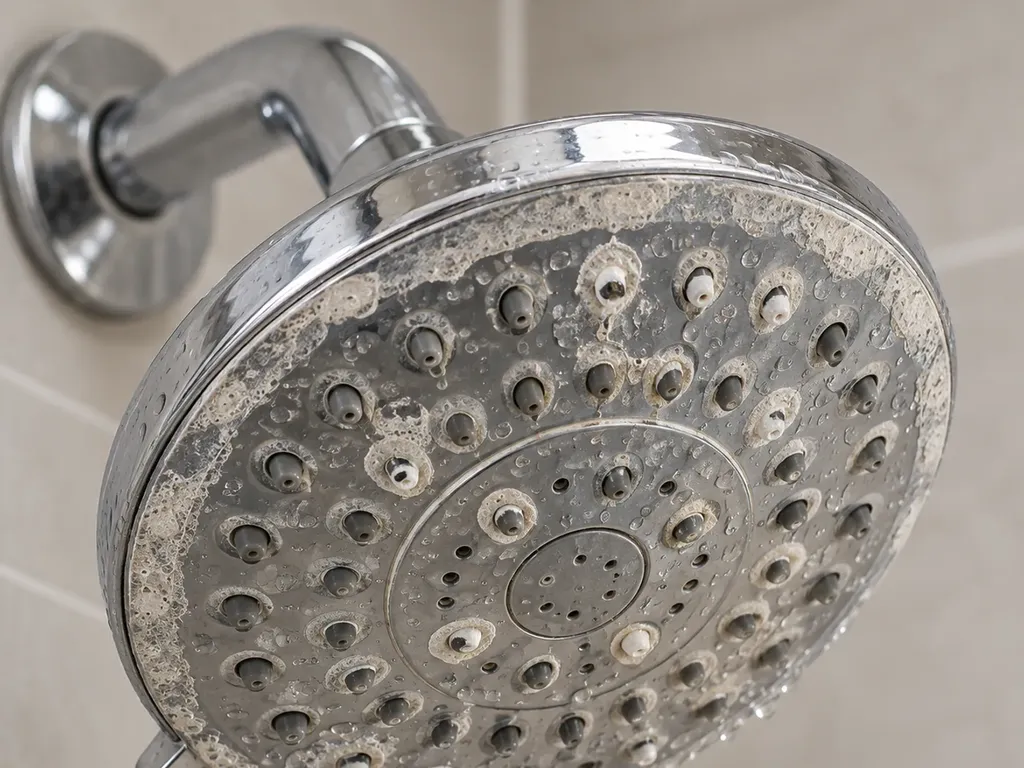
Crusty shower head. White buildup clogs the spray.
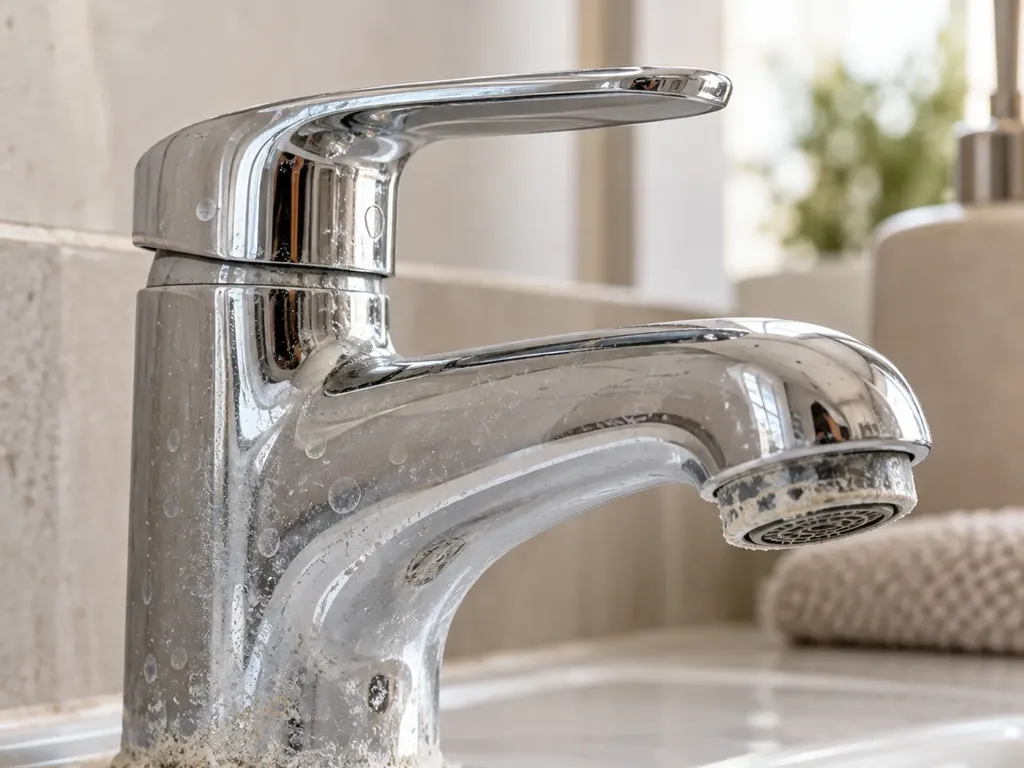
Faucet scale. Comes right back after you scrub.
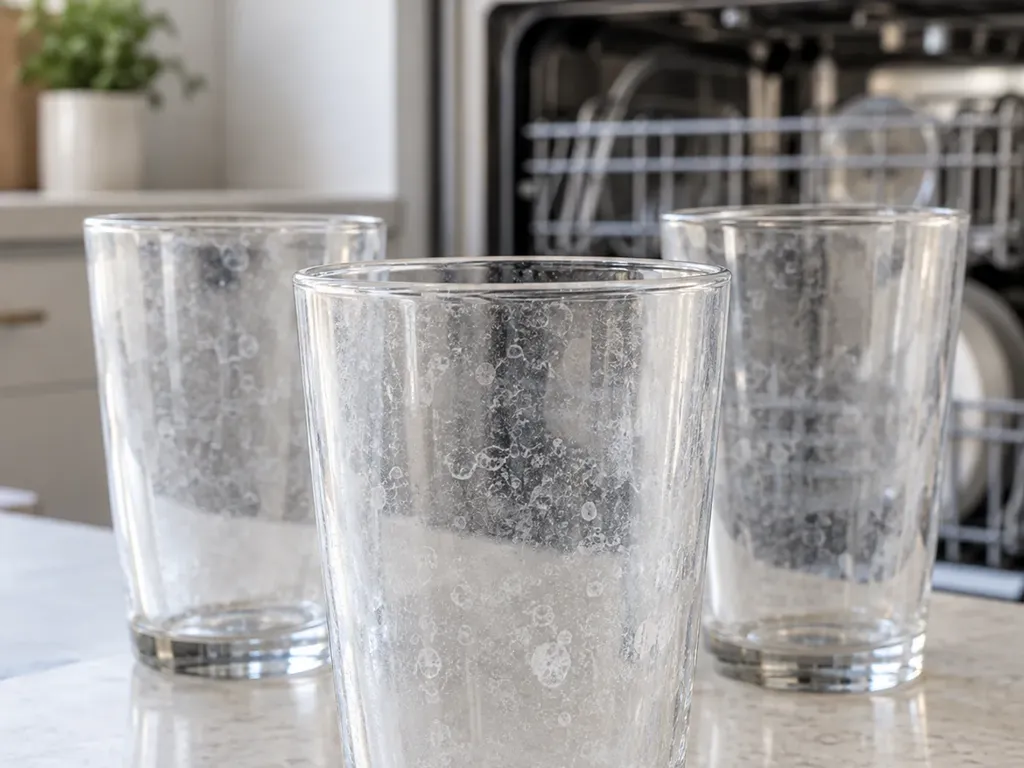
Cloudy glasses. Even right out of the dishwasher.
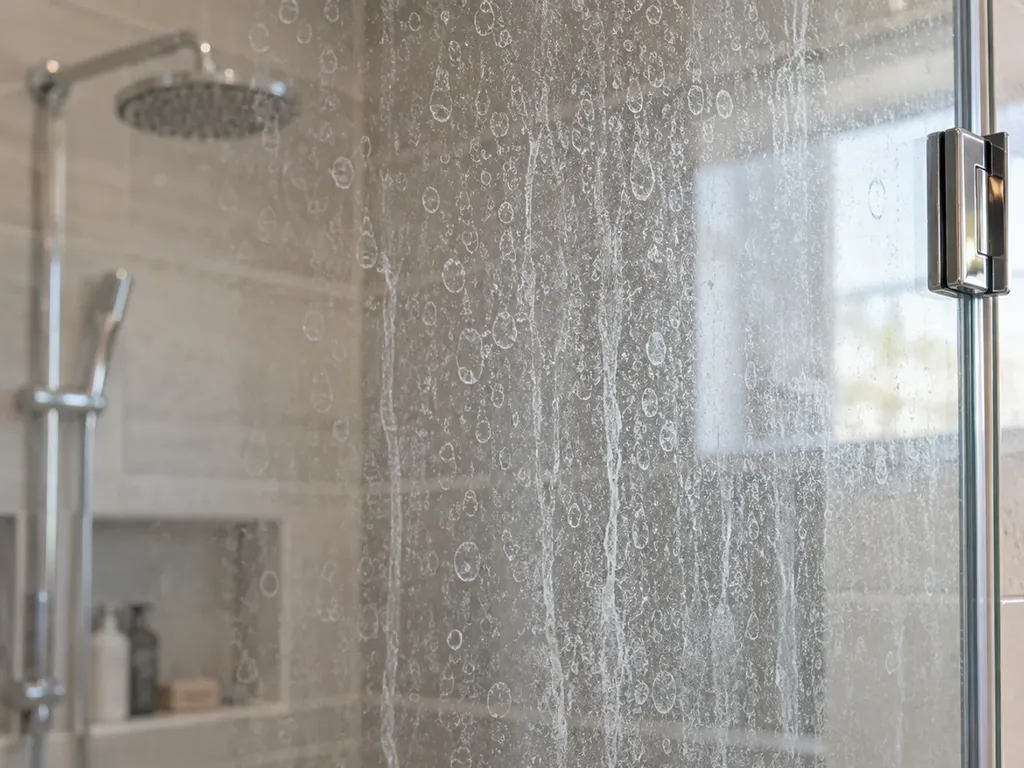
Hard water stains on glass. That foggy film that won't wipe off.
See 2 or more? Your water is hard.
What Miami-Dade's water report shows
- Up to 33 parts per trillion of PFOS in the main system in 2025, against the EPA's new limit of 4.
- 2.5 ppm: average chloramine in the main system.
- June 6, 2025: when Miami-Dade stopped adding fluoride.
Sources: Miami-Dade WASD 2025 Water Quality Report.
Where Miami's water comes from
Miami-Dade pulls almost all of its water from the Biscayne Aquifer, a shallow layer of porous limestone right under South Florida. Water moving through that rock picks up calcium and magnesium, which is why the raw water is hard.
The county's three big plants, Alexander Orr, Hialeah and John E. Preston, treat it with lime softening, then disinfect with chlorine and add ammonia to form chloramine so it stays protected in the pipes. Hialeah also runs a reverse osmosis plant that draws from the deeper, brackish Floridan Aquifer. Homes in South Dade get water from smaller plants that use chlorine instead.
So depending on where you live, your water can taste different from a friend's across the county. (Miami-Dade WASD 2025 report)
What Miami's 2025 report says about PFAS
PFAS are man-made "forever chemicals." In 2024, the EPA set a drinking water limit of 4 parts per trillion for PFOA and PFOS. Miami-Dade's 2025 report showed PFOS in the main system up to 33 parts per trillion and PFOA up to 13.
The county notes that compliance monitoring is still underway and utilities have several years to meet the new limits. The water meets current rules. But if you'd rather not wait, the reliable fix at home is certified reverse osmosis at the kitchen sink.
Also new for Miami: the county stopped adding fluoride in June 2025 to comply with a new state law. Natural fluoride in the aquifer remains at low levels.
Best setup for Miami homes
- City Water System: $2,950 installed. Softener for hardness, carbon for the disinfectant, RO for drinking water
Worried about PFAS? Our Ultimate system adds whole-house carbon plus certified RO.
Life with it vs. without
Without It
- Spots, scale or that pool taste
- Guessing what you need
- Buying and hauling bottled water
- Off-tasting coffee and cloudy ice
- Second-guessing the water you cook with
- A fridge filter that barely helps
With It
- Clean, soft-feeling water
- A system matched to Miami water
- Bottled-water taste from your own faucet
- Better coffee and clear ice
- Clean water for cooking and the kids' bottles
- Fresh-tasting water at the kitchen sink
How we work, start to finish
- 1
You reach out or book online
- 2
A rep calls you, usually within 5 minutes, to confirm your system and answer questions
- 3
We schedule a licensed local plumber, usually within a week
- 4
Install day: a few hours, plus a before-and-after water test
- 5
After that: new filters every 6 months if you subscribe
Water advice built on local data
20+ years in water, and every city page starts from that city's own water reports.
- 20+ years in water
- Our own patents
- We supply other water companies
- 15,000+ of systems sold
- Licensed installers
More FL Cities
Fort Lauderdale, FLFort Lauderdale, FLThe city softens its water before it reaches you, at about 3 grains per gallon. What it adds is chloramine, a disinfectant that gives water that pool taste and smell. Here's what actually fixes it.Learn moreWest Palm Beach, FLWest Palm Beach, FLWest Palm Beach water comes from rainwater stored in the Grassy Waters Preserve. The city softens it at the plant, so it's only moderately hard, and disinfects with chloramine and UV.Learn moreTampa, FLTampa, FLTampa water measures about 8 to 11 grains per gallon of hardness, well into the hard range, and it's disinfected with chloramine. Here's what that means for your home, and which system fixes it.Learn moreRelated Pages
Questions people ask
Is Miami water hard?
The aquifer is very hard; the county softens at the plant.
Does Miami have PFAS in the water?
The 2025 report shows PFOS up to 33 ppt against a new EPA limit of 4.
Does Miami use chloramine?
Yes, in the main system.
Does Miami add fluoride?
No, not since June 2025.
What filter removes PFAS?
Certified reverse osmosis.