



How to change reverse osmosis filters
About 15 minutes, a towel and the right filters.
- Plain English
- From installers
- Free water report
Want the answer for your home?
Tell us your ZIP code and a rep calls you within 5 minutes to answer every question. No pressure, no sales visit.
You're probably on this page because:
- Your RO water is tasting off
- Flow from your RO faucet is slowing down
Time for new filters. Here's how.
What you need
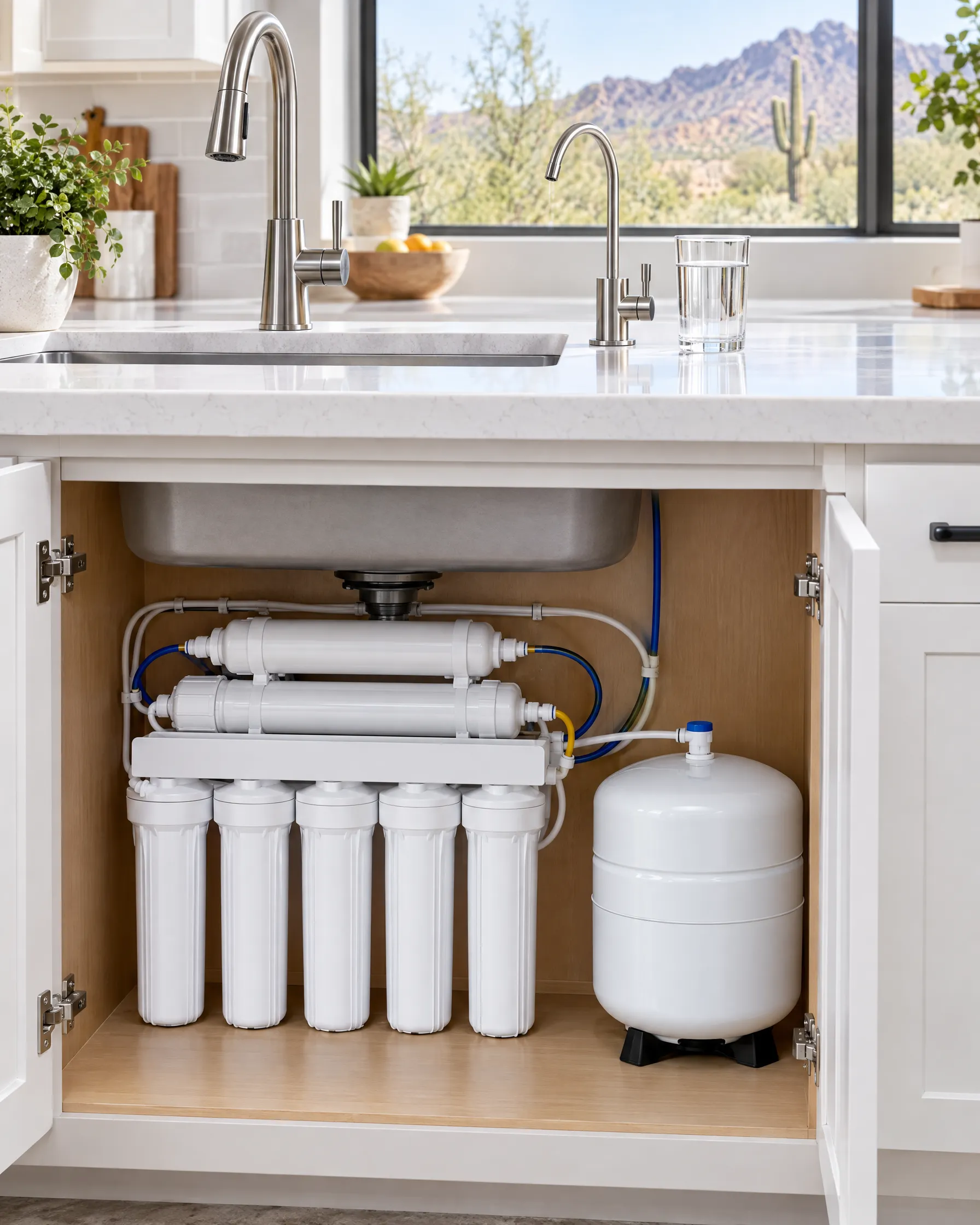
- New filters for your model
- A towel and small bucket
- The housing wrench
Steps, plus the mistakes to avoid
We've answered this question thousands of times, on calls, on installs and for the water companies we supply.
1. Shut off the cold water feed and the tank valve. 2. Open the RO faucet to release pressure. 3. Unscrew each housing and swap the filter. 4. Check the O-rings seat cleanly. 5. Turn the water back on and check for leaks. 6. Flush the first tank or a few minutes of water.
The mistakes we see most: forgetting to release pressure, pinched O-rings, and skipping the flush so the first glass tastes like carbon.
Written by people who install these every day
20+ years in water. No fluff, just how it really works.
- 20+ years in water
- Our own patents
- We supply other water companies
- 15,000+ of systems sold
- Licensed installers
How to change your filters
 Change Whole-House FilterHere's how to change a whole-house filter safely, and when it's better to book a plumber.Learn moreHow to change your water filters, step by stepStep-by-step guides and videos for every filter we sell, plus how often to change each one.Learn more
 Replace Shower CartridgeSwapping a shower filter cartridge takes a few minutes and no tools. Here's how.Learn more
Related Pages
Questions people ask
How often should I change RO filters?
Pre-filters every 6 to 12 months; membrane every 2 to 3 years.
How do I know my RO filter needs changing?
Slower flow or off taste.
Do I need to flush after changing?
Yes.
Can I change the membrane myself?
Yes, carefully.
Why is my RO leaking after a change?
Usually an O-ring.
Can a plumber do it?
Yes, book the service.