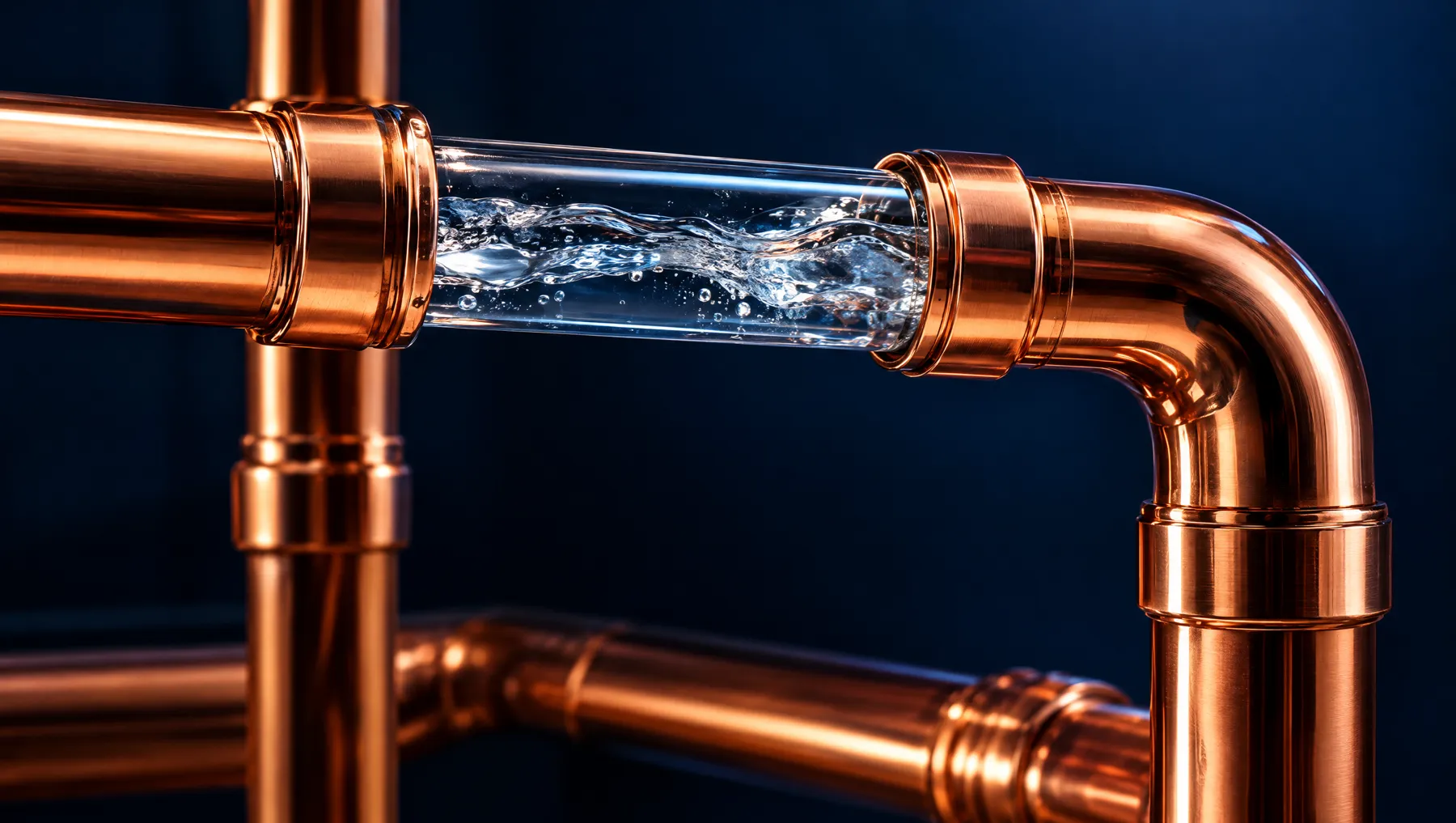


What is reverse osmosis, and how does it work?
Water pushed through a membrane so fine almost everything else stays behind.
Reverse osmosis pushes water through a membrane with pores so small that most dissolved solids, metals and chemicals get left behind. Here's how it works, step by step.
- Plain English
- From installers
- Free water report
Want the answer for your home?
Tell us your ZIP code and a rep calls you within 5 minutes to answer every question. No pressure, no sales visit.
You're probably on this page because:
- You heard RO is the best filter and want to know why
- You're wondering if RO water is healthy
Here's how it works, simply.
How it works, step by step
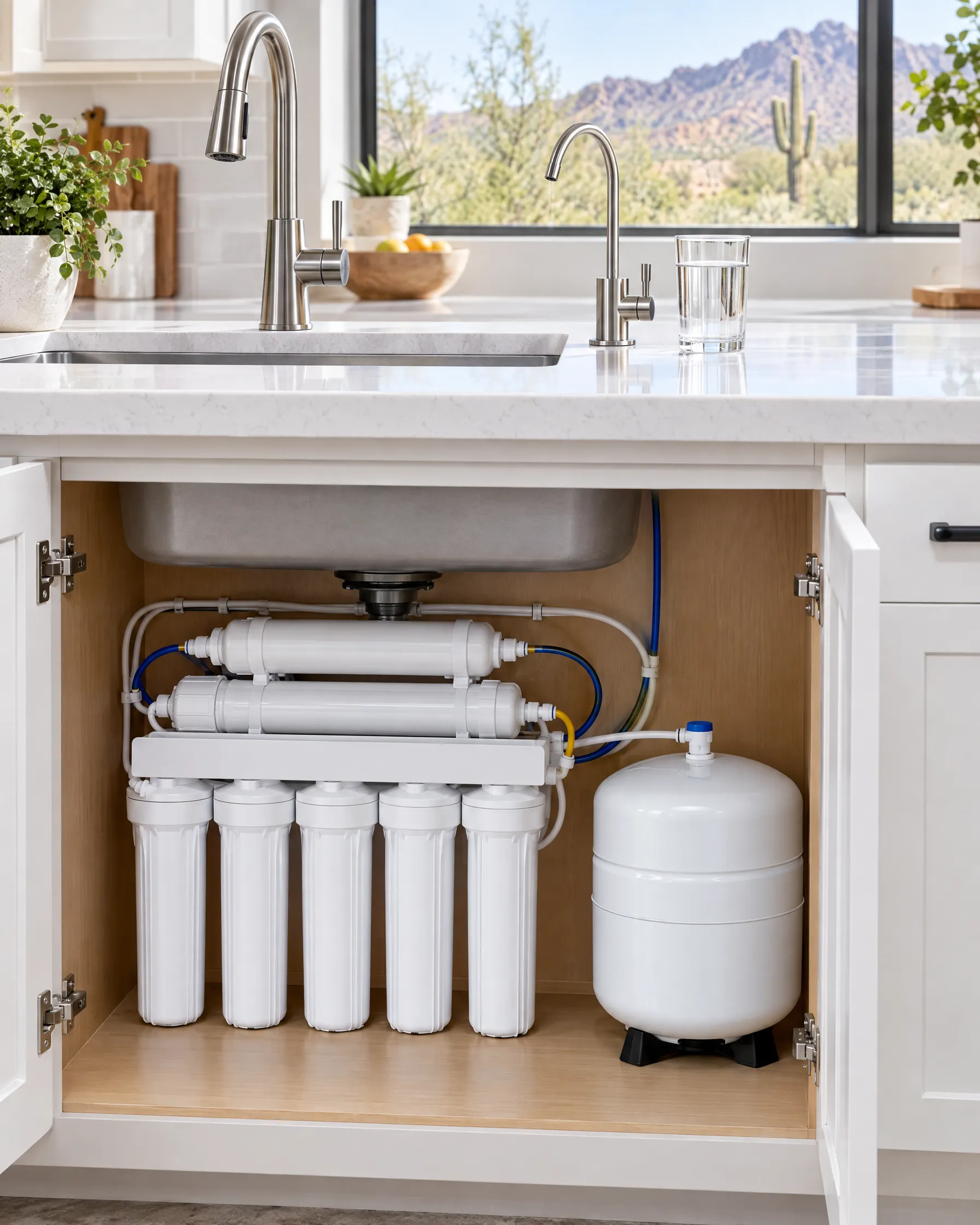
- Sediment pre-filter catches grit
- Carbon pre-filter removes chlorine, which protects the membrane
- RO membrane separates clean water from dissolved stuff
- Concentrate flushes to the drain
- Post-filter and remineralization polish the taste
What it removes, and what it doesn't
Certified RO reduces lead, fluoride, arsenic, nitrates, PFOA and PFOS, and most dissolved solids. Don't rely on it for bacteria; add UV for that.
RO vs distilled
Distilled water is boiled and condensed. RO is pushed through a membrane. Both are very low in dissolved solids, but RO is made right at your sink.
Our take
Why the carbon stage matters more than people think
This is the stuff our customers ask us most, after 20+ years and [thousands] of systems sold.
RO membranes are damaged by chlorine. That's why every good RO system has a carbon pre-filter in front. If you skip changing the pre-filter, chlorine reaches the membrane and it wears out early.
In chloramine cities, that pre-filter has to handle chloramine too. That's one more reason to change filters on schedule, and why we put them on a subscription.
Written by people who install these every day
20+ years in water. No fluff, just how it really works.
- 20+ years in water
- Our own patents
- We supply other water companies
- [Thousands] of systems sold
- Licensed installers
Written by [Name], [title], [20+] years in water treatment. Reviewed by [Licensed plumber name], license # [#]. Last updated [date]. Sources: listed under each "By the numbers" block and linked in the copy
Learn
 Best shower filter for hard waterWhat a shower filter can and can't do for hard water, and how to pick one.Learn more
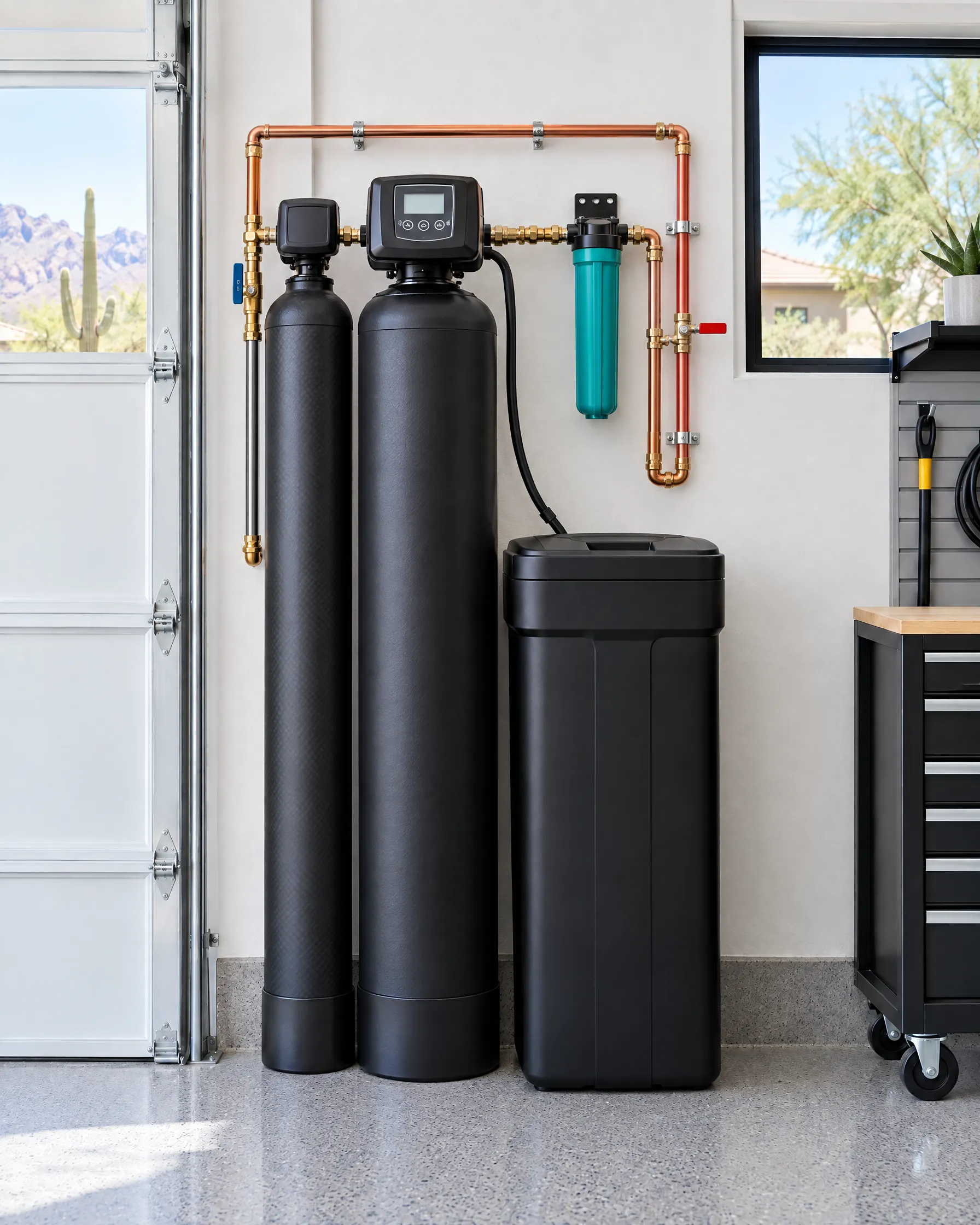 Best Water Softener SystemThe best water softener system for most homes is a whole-house system sized to your water: a softener for hardness, carbon for chlorine or chloramine, and reverse osmosis for drinking water. Ours, the City Water System, is $2,950 installed. Not sure it fits your home? A rep will call you and answer every question.Learn more
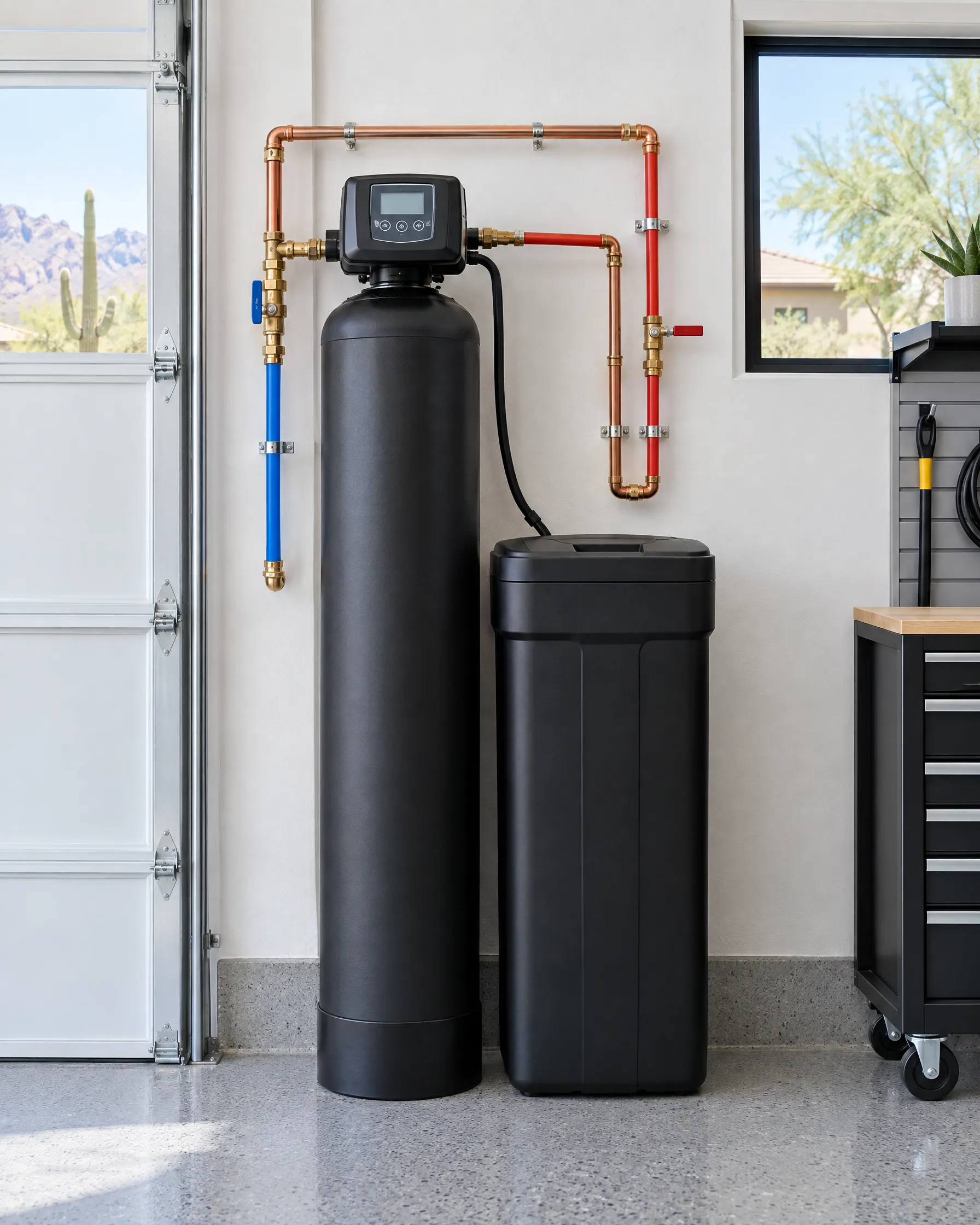 How does a water softener workA water softener removes the calcium and magnesium that make water hard by trading them for sodium or potassium. This is called ion exchange.Learn more
 How hard is your waterHard water is common across most of the US. See how hard the water is in your state and city.Learn more
 Salt vs salt-free water softenerSalt-based softeners remove hardness minerals. Salt-free conditioners change them so they don't stick as scale. Here's which fits your home.Learn more
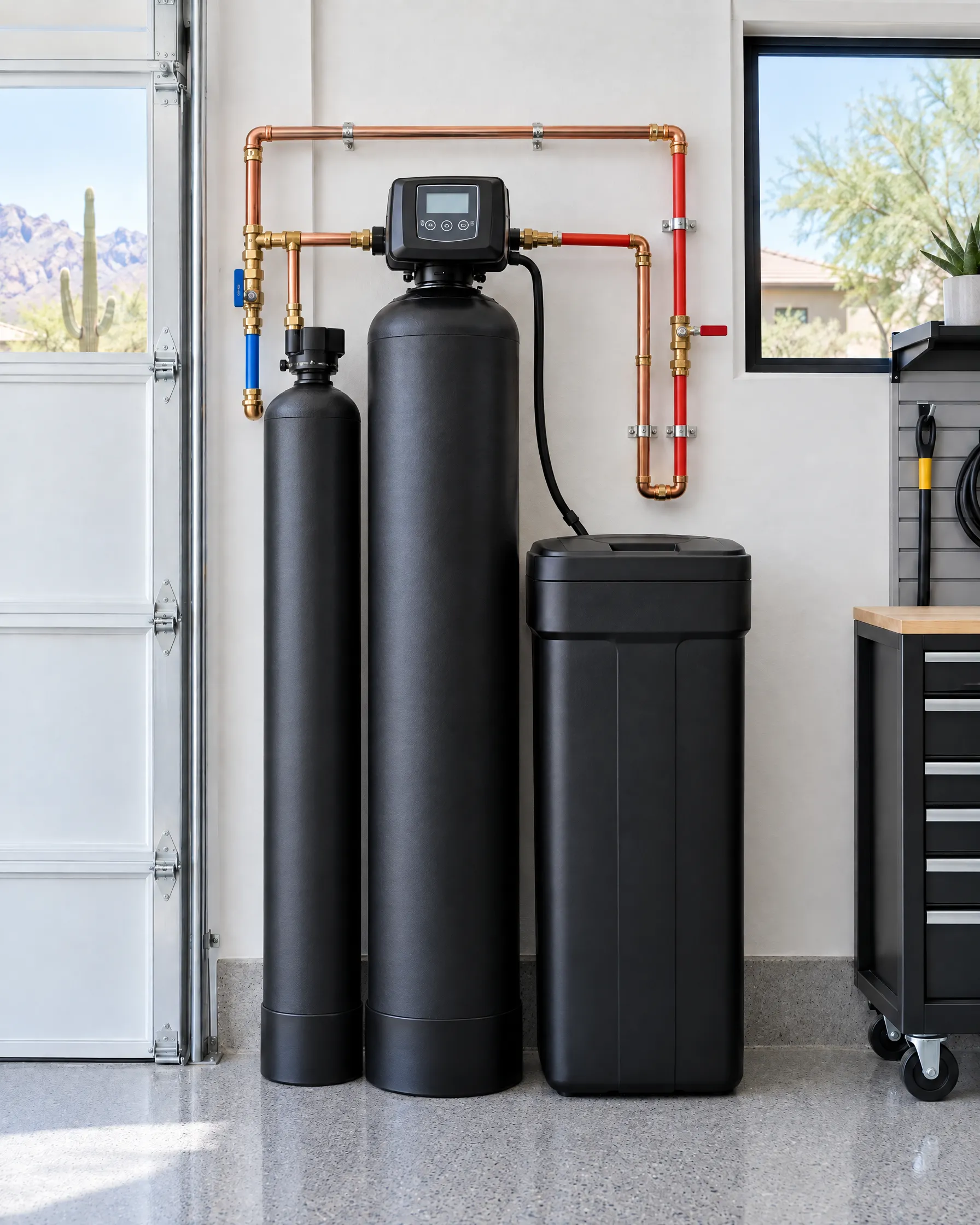 Water softener brands comparedHow the major softener brands compare on price, installation and service, so you know what you're paying for.Learn more
Related Pages
Questions people ask
What is reverse osmosis water?
Water pushed through a fine membrane that removes most dissolved solids.
Is reverse osmosis water good for you?
Yes. Most minerals come from food; remineralization adds some back.
Does reverse osmosis remove minerals?
Yes, which is why we remineralize.
Does reverse osmosis remove fluoride?
Yes.
Is RO the same as distilled water?
No, different process, similar purity.
Does reverse osmosis waste water?
Some. Newer tankless systems waste much less.