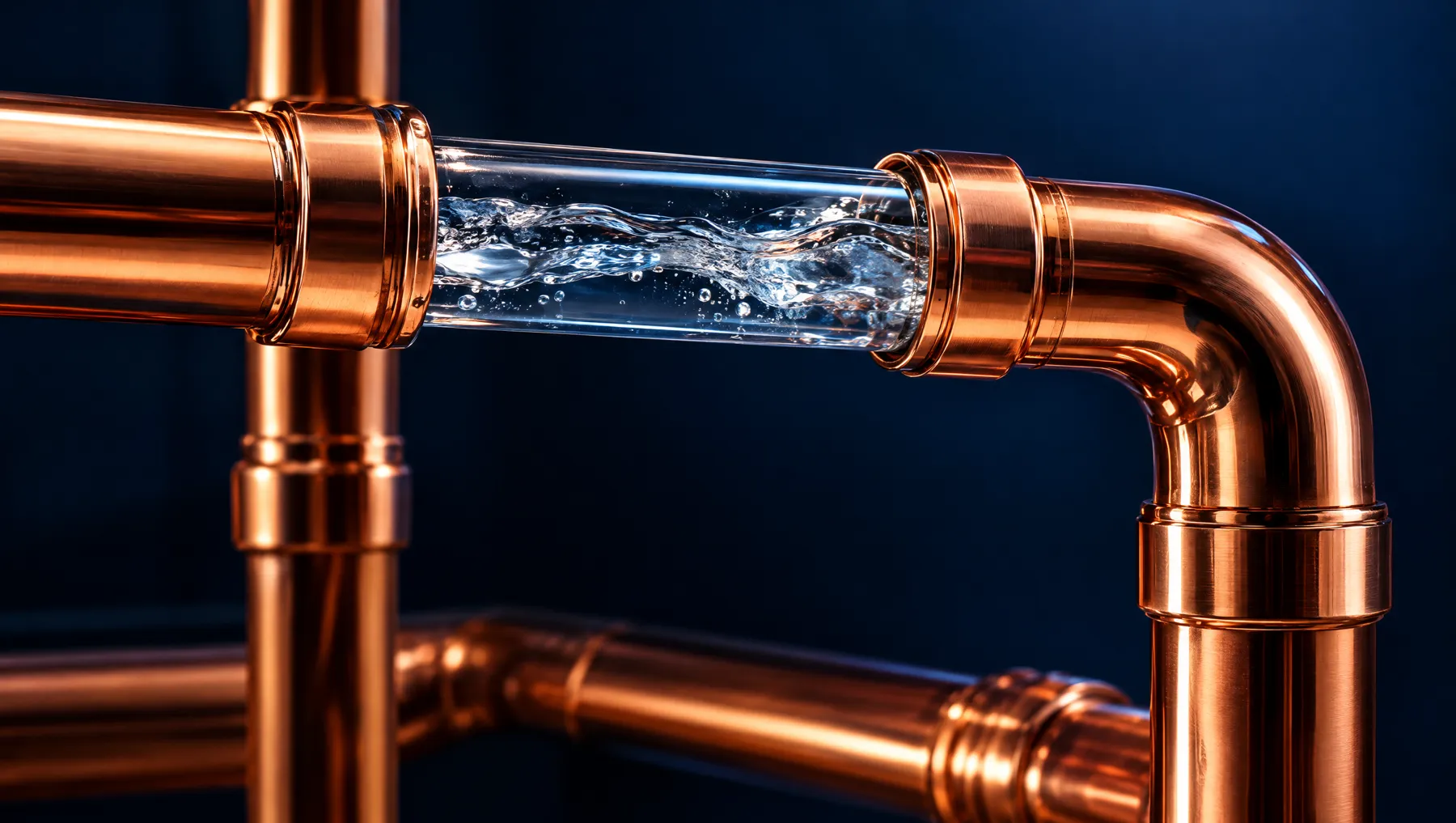


Best water softener system: what actually matters
For most homes, it's a whole-house system sized to your water: softener, carbon filter and drinking water in one.
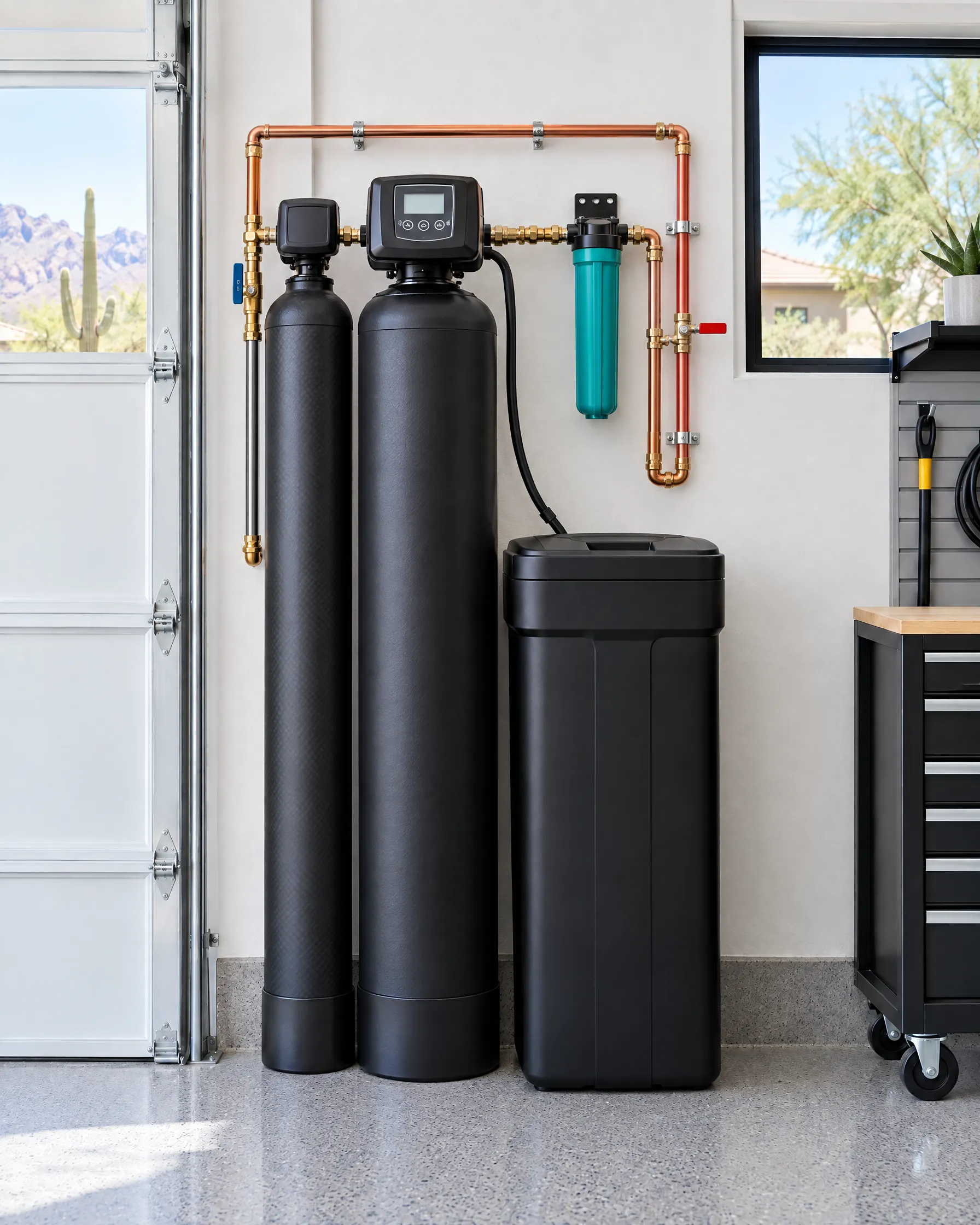
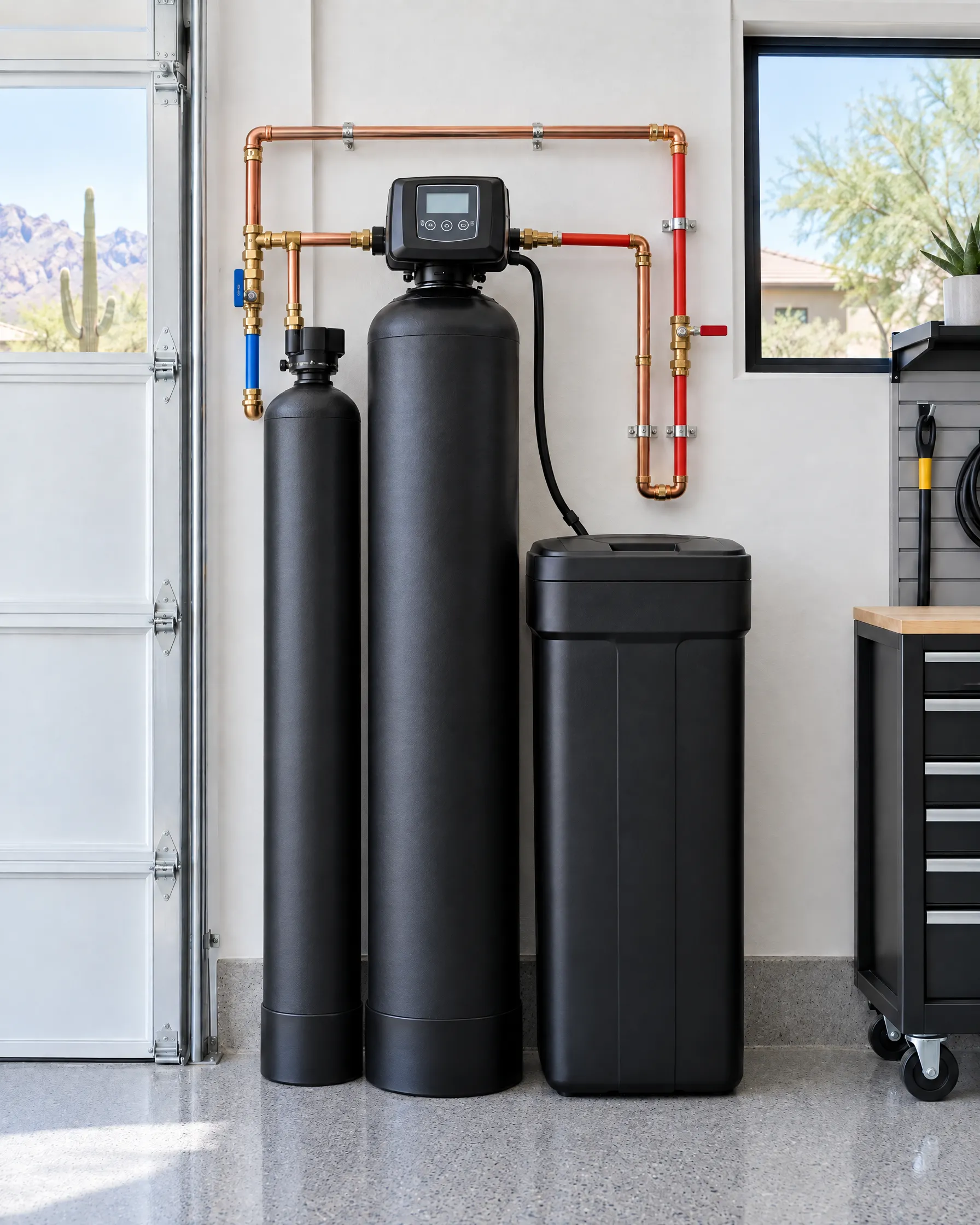
The best water softener system for most homes is a whole-house system sized to your water: a softener for hardness, carbon for chlorine or chloramine, and reverse osmosis for drinking water. Ours, the City Water System, is $2,950 installed. Not sure it fits your home? A rep will call you and answer every question.
- From installers, not affiliate lists
- Real sizing math
- Free water report
Want to know if it fits your home?
A rep calls you within 5 minutes, checks your water by ZIP code and answers every question. No pressure, no sales visit.
You're probably on this page because:
- Every "best water softener" list says something different
- You have a $7,000 quote, a $600 online option and no idea which is right
- You're worried about buying the wrong size
Here's what actually separates a great softener from a bad one.
Softeners, by the numbers
- About 85% of US homes have hard water.
- $5,500 to $5,750: the median documented dealer softener quotes (Kinetico, Culligan).
- 10 to 15 years: how long a well-chosen, well-installed softener usually lasts.
Sources: Market Growth Reports; TapWaterData documented quotes; industry averages.
The 6 things that make a softener good (or bad)
- The right size. Sized to your household and hardness so it recharges about once a week. Too small wastes salt; too big lets resin sit. See what size water softener do I need.
- A metered control valve. It recharges only when you've used enough water. Timer valves recharge on a schedule and waste salt and water. Ask for the valve brand and model; established brands have parts and service available for years.
- The right resin. On chlorinated city water, 10% crosslink resin resists chlorine and lasts longer than standard 8%. On wells with a little iron, fine mesh resin handles it better.
- Carbon in front on city water. Chlorine and chloramine break down resin over time. A carbon stage before the softener protects it, and catalytic carbon handles chloramine.
- Certification. Look for NSF/ANSI 44 (the standard for softeners) or the WQA Gold Seal. Certified softeners have proven their capacity and efficiency claims in testing.
- A licensed install with a bypass and proper drain. The best softener installed wrong is a bad softener. See water softener installation cost.
Every type of softener, compared
| Type | How it works | Best for | Watch out for |
|---|---|---|---|
| Single-tank salt-based | Ion exchange removes hardness | Most homes on city or well water | Brief hard water during overnight recharge |
| Twin tank | Two tanks alternate | Big families, 24/7 water use | More cost and space |
| Softener and carbon combo | Softening and carbon in one tank | Moderate hardness, chlorine cities, tight spaces | Less carbon; compromise on cleaning cycles |
| Dual-tank (softener plus carbon) | Separate softener and carbon tanks | Chloramine cities, bigger homes | Takes more space |
| Salt-free conditioner | Changes minerals so they don't stick | Scale prevention, no-salt areas | Doesn't remove hardness; no spot-free |
| Electronic or magnetic descaler | Signal on the pipe | Renters trying a no-plumbing option | Results vary; not proven like ion exchange |
| Shower softener | Filters chlorine at the shower | Renters, quick fix | Doesn't soften the whole house |
Compare salt vs salt-free See saltless softeners
Box capacity vs real capacity
This is the detail most "best of" lists skip. A softener's grain rating is usually measured at the highest salt setting. Set it to save salt and the real capacity drops. Roughly: one cubic foot of resin gives about 20,000 grains on a low setting and 30,000 or more on the highest.
So a "32,000 grain" softener set to be efficient might give you closer to 20,000 to 24,000. Size to the real number. NSF/ANSI 44 also includes an efficiency rating, which tells you how many grains a softener removes per pound of salt. [Verify the exact efficiency threshold before publishing.]
Use the size guide Calculate my cost
The best softener for your situation
| Your situation | What we'd pick | Why |
|---|---|---|
| City water with chloramine (Tampa, Miami, Dallas, Houston) | Dual-Tank System | More catalytic carbon protects resin and removes chloramine |
| City water with chlorine, moderate hardness | City Water System or a combo | Carbon handles chlorine; one install covers it |
| Very hard city water (Jacksonville, San Antonio) | 48,000 grain or larger, metered | Capacity to go a week between recharges |
| Well with iron or sulfur | Well Water System | Iron and sulfur treatment before the softener |
| Condo, 1 to 2 people | 24,000 or 32,000 grain | Small footprint, right-sized |
| Big family, water at all hours | Twin tank | Soft water 24/7 |
| Salt restricted, or no-salt preference | Salt-free conditioner | Scale prevention without salt |
| Already soft city water (Fort Lauderdale, Fort Myers) | No softener; carbon and RO | The city already softens it |
See complete systems and prices
The real cost over 10 years
| Cost | What to expect |
|---|---|
| Install | $1,000 to $5,000 for most homes; ours from $2,950 with filtration and RO |
| Salt | About one 40-lb bag a month for a typical family |
| Carbon and RO filters | Every 6 to 12 months |
| Resin | About 10+ years with carbon in front on city water |
| Repairs | Lower with an established valve brand and available parts |
A cheaper softener with a timer valve can cost more over 10 years than a better one, just in salt and water. Run your numbers in the savings calculator.
Open the savings calculator See the cost guide
Red flags when you're shopping
- No price until someone's in your house
- A quote that doesn't list grain size, valve or resin
- No water test before recommending a size
- A softener pushed on already-soft city water
- "Removes everything" claims without certifications
- Pressure to sign today for a discount
Tools to decide
- Check your water by ZIP code (free, instant)
- What size water softener do I need?
- Water softener cost calculator
- Savings calculator
- Salt vs salt-free
- Water softener vs water filter
- Water softener brands compared
- Free hard water test kit
Don't ask if it pays for itself. Ask how many times.
Soft water protects your water heater, cuts soap costs and saves your appliances. Every year.
Savings in year one, and every year after
$414
- 10-year total
- $4,136
- Pays for the City Water System
- 1.4 times over 10 years
- Water heater energy
- $130
- Detergent and cleaning
- $144
- Appliances and fixtures
- $140
- Bottled water (with RO)
- $0
An estimate, not a guarantee. Your numbers depend on your water, your home and your habits. Enter your ZIP code to use your local hardness; until then it assumes 10 grains.
Sources: Water heater efficiency: WQRF and Battelle (gas tank heaters lost up to 48% efficiency on hard water; the calculator uses a conservative middle value). Detergent: WQRF laundry and dishwasher studies (about 30% less at 10 gpg, nearly 70% less at 25 gpg). Fixtures: Battelle (low-flow shower heads clogged in about 18 months on hard water). Appliance figures are our own conservative estimate until customer data replaces them.
Life with it vs. without
| Without it | With it |
|---|---|
| Buying from a "best of" list | A softener matched to your water |
| Paying for a sales pitch | Clear prices |
| The wrong size | Real sizing math |
How we work, start to finish
- 1
You reach out or book online
- 2
A rep calls you, usually within 5 minutes, to confirm your system and answer questions
- 3
We schedule a licensed local plumber, usually within a week
- 4
Install day: a few hours, plus a before-and-after water test
- 5
After that: new filters every 6 months if you subscribe
Our take
What we've learned from [thousands] of systems
We've been in water for more than 20 years. We build our systems with our own manufacturers, some with our own patents, and we've wholesaled water equipment to other water companies for years. That puts us on both sides: we see what dealers buy, and what homeowners actually live with.
What works: softeners with metered valves, chlorine-resistant resin, and carbon in front on city water. Those are the systems that come back for filter subscriptions years later, not for repairs.
What fails most: undersized softeners that recharge every two days, softeners put on iron-heavy wells without an iron filter, and cheap timer valves with no parts available five years later.
What people ask us for most: no more spots and scale, softer showers, and drinking water they don't have to buy in jugs. That's exactly why our best seller is a whole-house system that does all three, not a softener alone.
Why trust this guide
20+ years in water. We build systems with our own manufacturers, hold our own patents and supply other water companies. This guide is how our installers actually choose.
- 20+ years in water
- Our own patents
- We supply other water companies
- [Thousands] of systems sold
- Licensed installers
Written by [Name], [title], [20+] years in water treatment. Reviewed by [Licensed plumber name], license # [#]. Last updated [date].
Learn
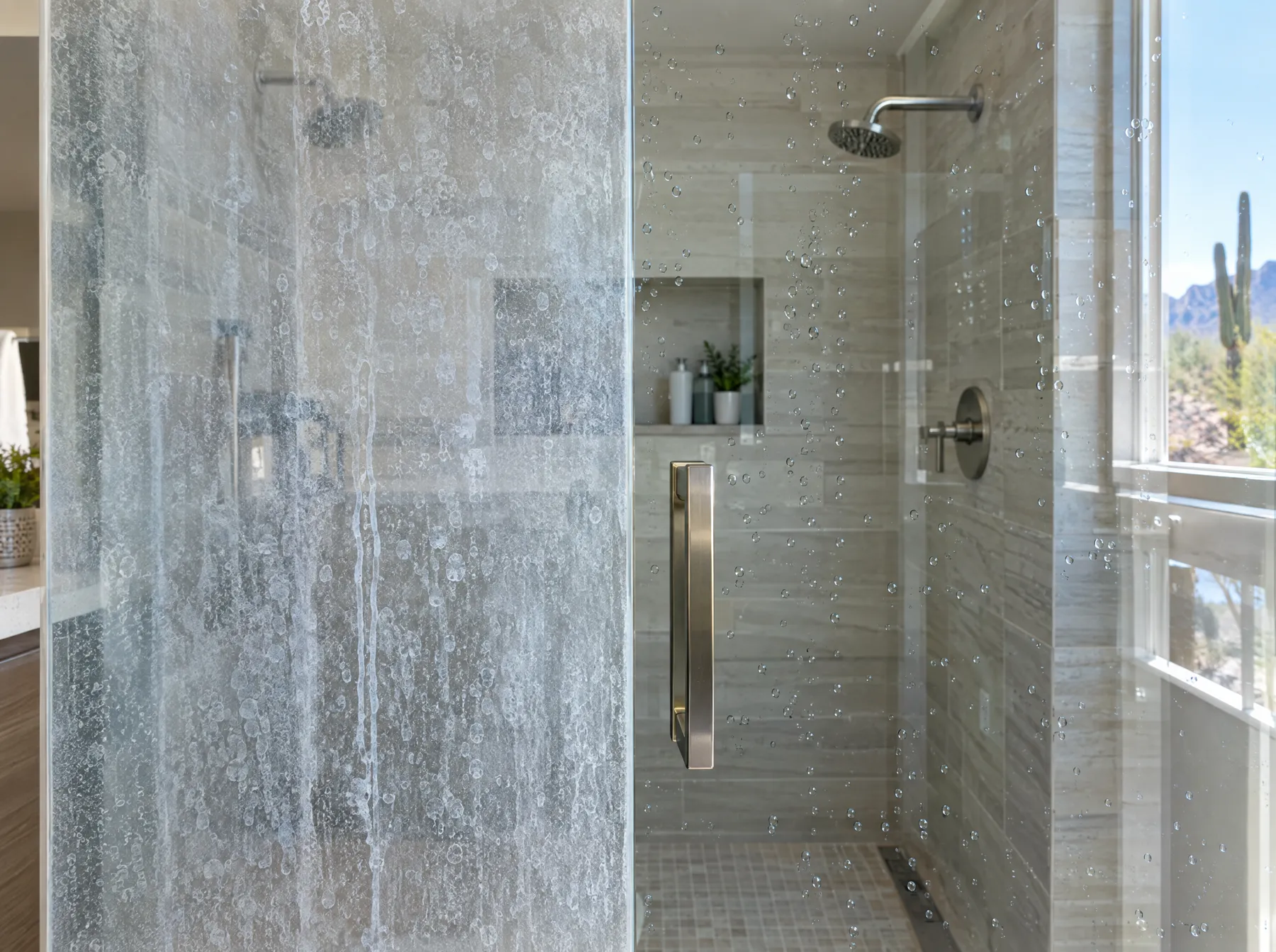 Best shower filter for hard waterWhat a shower filter can and can't do for hard water, and how to pick one.Learn more
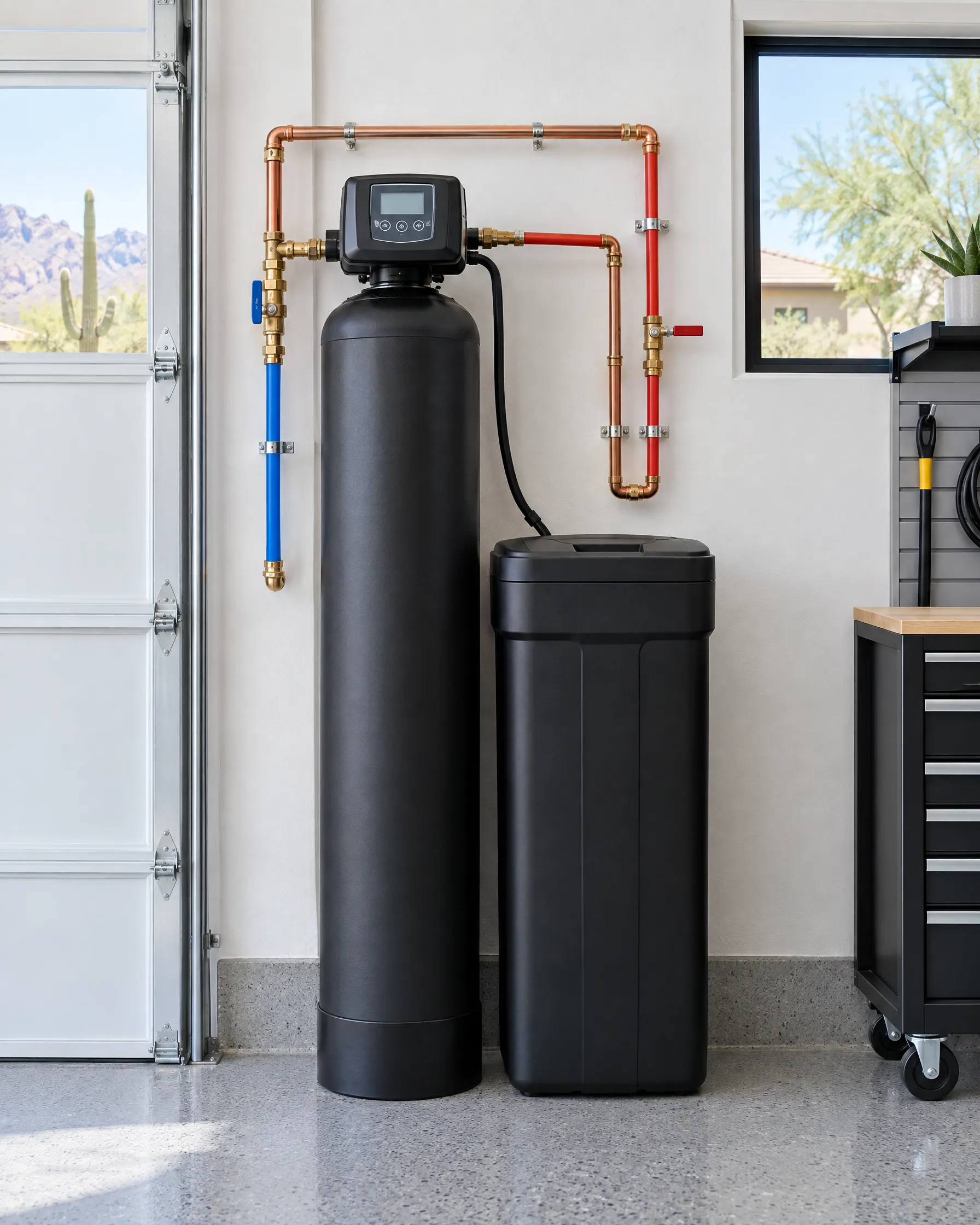 How does a water softener workA water softener removes the calcium and magnesium that make water hard by trading them for sodium or potassium. This is called ion exchange.Learn more
 How hard is your waterHard water is common across most of the US. See how hard the water is in your state and city.Learn more
 Salt vs salt-free water softenerSalt-based softeners remove hardness minerals. Salt-free conditioners change them so they don't stick as scale. Here's which fits your home.Learn more
 Water softener brands comparedHow the major softener brands compare on price, installation and service, so you know what you're paying for.Learn moreWater softener vs water filterA softener removes hardness minerals. A filter removes things like chlorine, sediment and chemicals. Many homes need both.Learn more
Related Pages
Questions people ask
What is the best water softener system?
The one sized to your home and water, with a metered valve, the right resin and carbon in front on city water, installed by a licensed plumber.
What is the best water softener for city water?
In chloramine cities, a dual-tank system with catalytic carbon. In chlorine cities, a softener with carbon in front.
What is the best water softener for well water?
One built from a well test, with iron and sulfur treatment before the softener.
Is a salt-free softener as good as salt-based?
For scale prevention, it works. For true soft water, salt-based.
What certifications should a softener have?
NSF/ANSI 44 or the WQA Gold Seal.
Metered or timer valve?
Metered. It saves salt and water.
What resin is best?
10% crosslink on chlorinated water; fine mesh for small amounts of iron.
How long should a good softener last?
10 to 15 years.
Is a more expensive softener better?
Not automatically. Compare valve, resin, size and install, not price.
How do I choose a water softener?
Start with your hardness and household size, then use the checklist above.