
How does a water softener work? A simple explanation
It swaps the minerals that cause scale for ones that don't.
A water softener removes the calcium and magnesium that make water hard by trading them for sodium or potassium. This is called ion exchange.
- Plain English
- From installers
- Free water report
Want the answer for your home?
Tell us your ZIP code and a rep calls you within 5 minutes to answer every question. No pressure, no sales visit.
You're probably on this page because:
- You're wondering what that tank in the garage actually does
- You want to understand how it works before you buy
Here's how it works, in plain English.
What makes water hard
Water picks up calcium and magnesium as it moves through rock like limestone. Those minerals leave scale, spots and soap film.
Ion exchange, step by step
- Water flows through a tank of resin beads
- The beads hold sodium (or potassium)
- Calcium and magnesium stick to the beads and sodium is released
- Soft water flows to your home
Regeneration
When the beads are full of hardness, the softener recharges: it rinses the beads with salty brine from the salt tank, flushes the hardness down the drain, and starts over. Metered softeners do this only when needed, usually overnight.
Salt vs salt-free
Salt-free conditioners don't use ion exchange. They change the minerals so they don't stick as scale, but don't remove them.
Our take
The part most explanations skip
This is the stuff our customers ask us most, after 20+ years and [thousands] of systems sold.
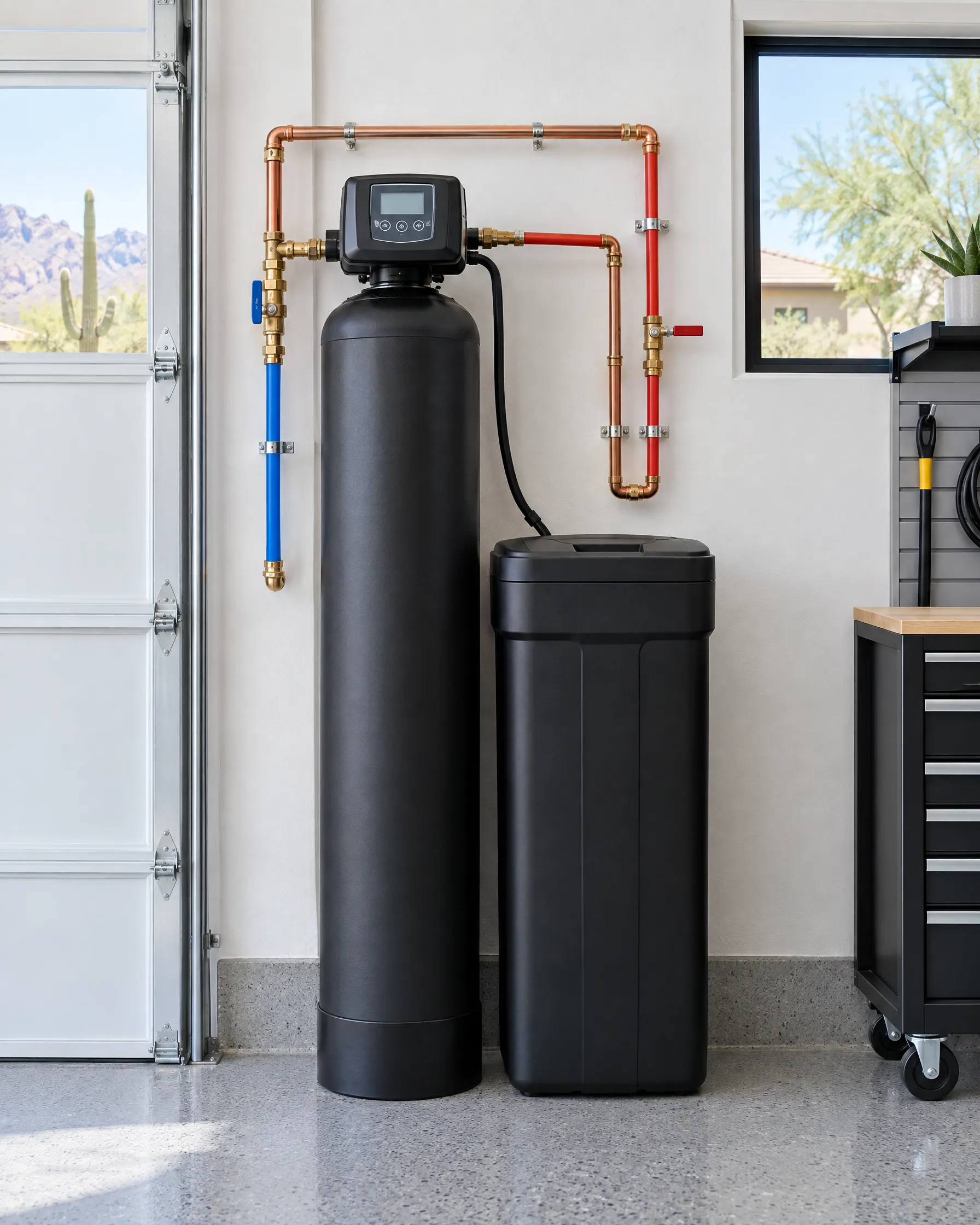
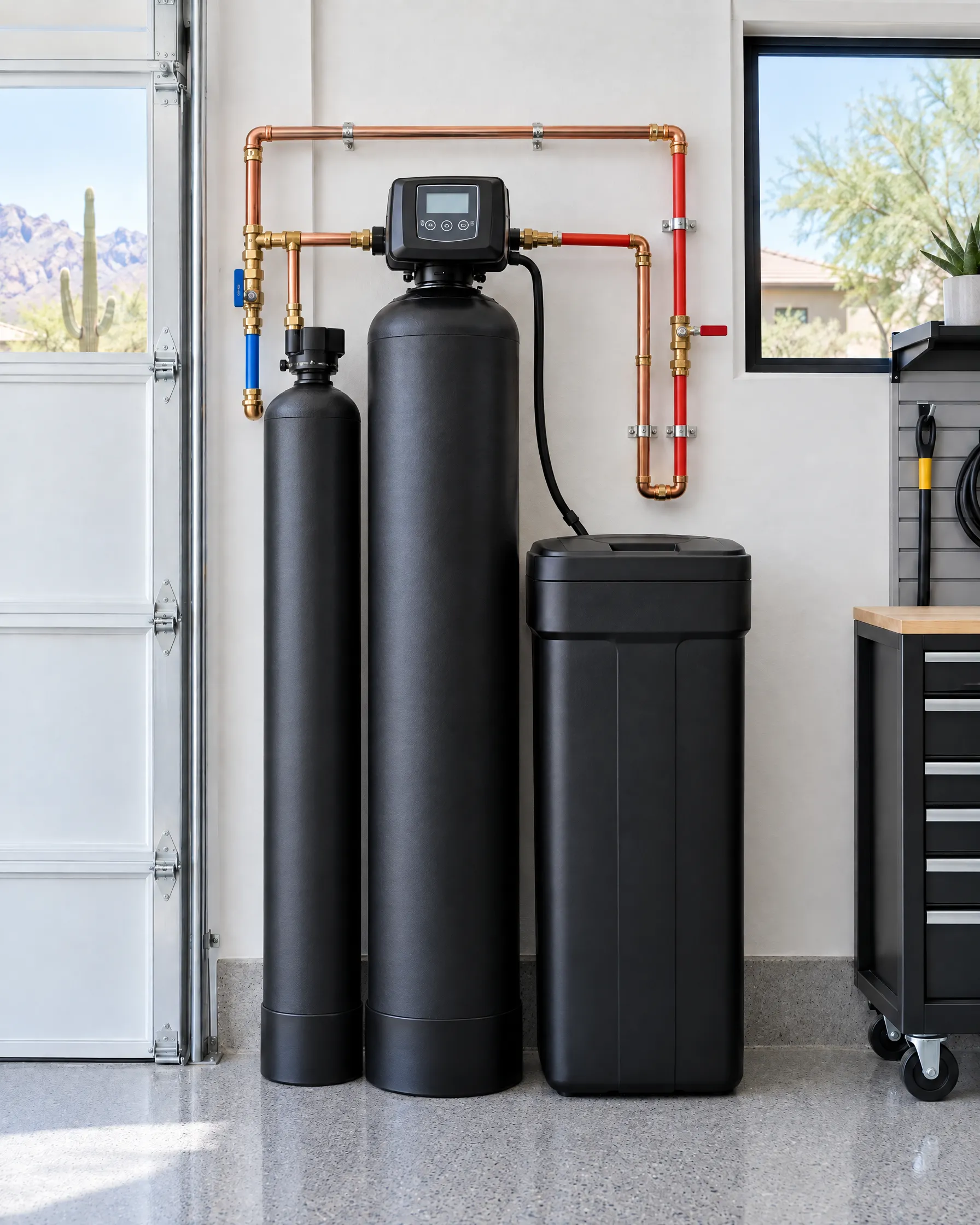
Most guides stop at "resin swaps calcium for sodium." What actually decides whether your softener works well is the control valve and how it's set. A metered valve that recharges only when you've used enough water saves salt and water. A timer valve recharges on a schedule whether you need it or not.
The other piece is chlorine. On city water, chlorine slowly breaks down the resin beads. That's why we put carbon in front of the softener: it protects the part that does the softening.
Written by people who install these every day
20+ years in water. No fluff, just how it really works.
- 20+ years in water
- Our own patents
- We supply other water companies
- [Thousands] of systems sold
- Licensed installers
Written by [Name], [title], [20+] years in water treatment. Reviewed by [Licensed plumber name], license # [#]. Last updated [date]. Sources: listed under each "By the numbers" block and linked in the copy
Learn
 Best shower filter for hard waterWhat a shower filter can and can't do for hard water, and how to pick one.Learn more
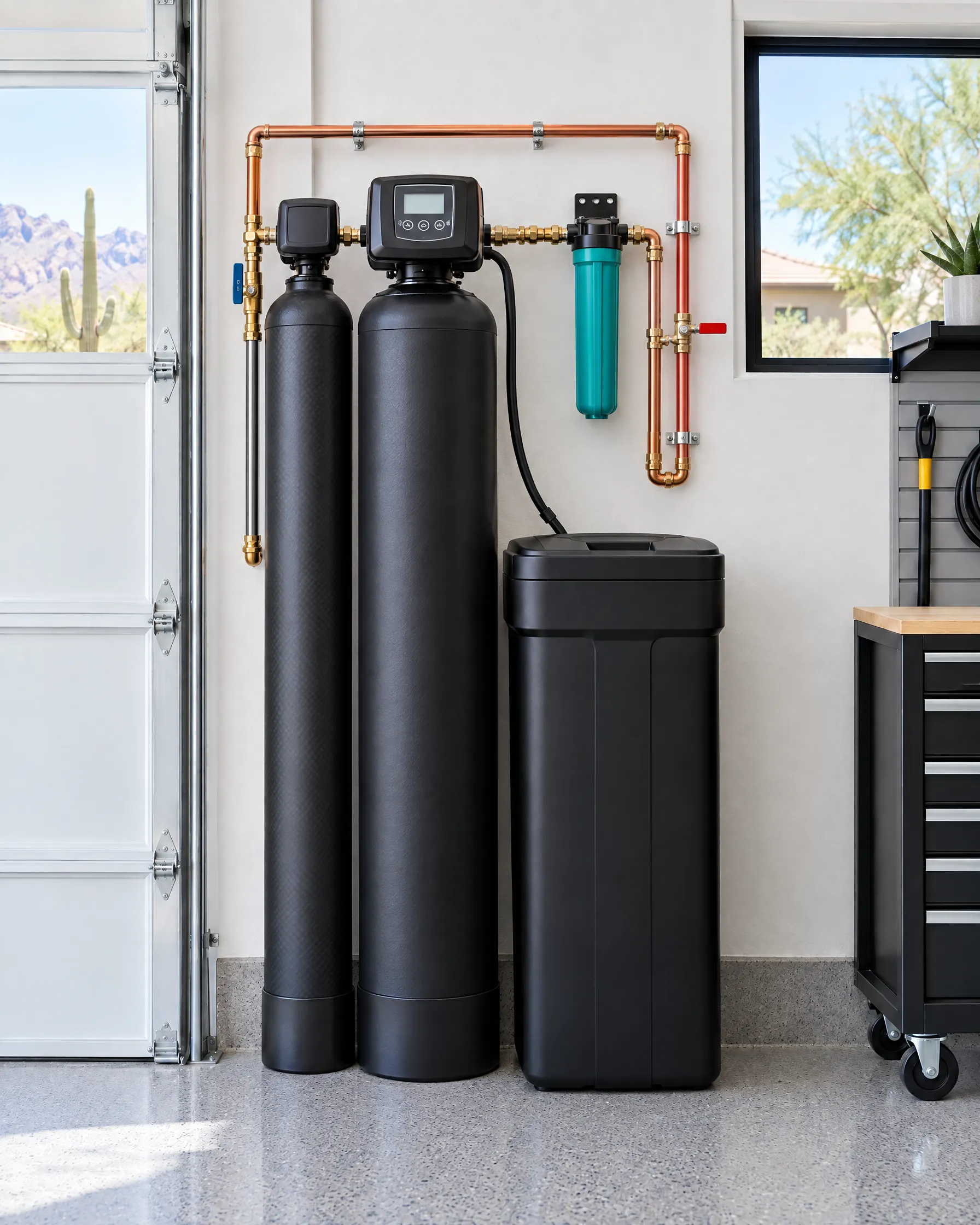 Best Water Softener SystemThe best water softener system for most homes is a whole-house system sized to your water: a softener for hardness, carbon for chlorine or chloramine, and reverse osmosis for drinking water. Ours, the City Water System, is $2,950 installed. Not sure it fits your home? A rep will call you and answer every question.Learn more
 How hard is your waterHard water is common across most of the US. See how hard the water is in your state and city.Learn more
 Salt vs salt-free water softenerSalt-based softeners remove hardness minerals. Salt-free conditioners change them so they don't stick as scale. Here's which fits your home.Learn more
 Water softener brands comparedHow the major softener brands compare on price, installation and service, so you know what you're paying for.Learn moreWater softener vs water filterA softener removes hardness minerals. A filter removes things like chlorine, sediment and chemicals. Many homes need both.Learn more
Related Pages
Questions people ask
What does a water softener do?
Removes calcium and magnesium so you don't get scale, spots and soap film.
Does a water softener filter water?
No. It removes hardness. Filtering chlorine takes carbon.
Does a water softener remove chlorine?
No. That takes a carbon filter.
How often should a water softener regenerate?
Usually about once a week, depending on use and hardness.
How long does regeneration take?
About 1.5 to 2 hours, usually overnight.
Does a water softener remove iron?
Small amounts. More needs an iron filter.