


Water softener repair: get it working again, any brand
Licensed plumbers. Fast booking.
Salt not going down, water feeling hard again, or a leak? Book a licensed local plumber to find the problem and fix it.
- Any brand
- Licensed plumbers
- Fast booking
Want the answer for your home?
Tell us your ZIP code and a rep calls you within 5 minutes to answer every question. No pressure, no sales visit.
You're probably on this page because:
- Your water feels hard again
- The salt isn't going down
- Your salt tank is full of water
Most softener problems are a quick fix.
Signs your softener needs repair
- Water feels hard again
- Salt isn't going down
- Salt tank full of water
- Leaking or running nonstop
- Spots coming back
Try these first (2 minutes)
- Salt level: keep it at least a third full
- Salt bridge: break up any hard crust in the salt tank
- Bypass valve: make sure it's set to service
- Power and clock: check after any outage
How booking works
- Book online or call
- Licensed plumber diagnoses it
- Fixed, often on the first visit
Service call: [$X, confirm]. Parts quoted before any work.
Repair or replace?
Over 10 to 15 years old, or the repair costs more than half a new one? Replacing usually makes more sense.
Book service
Our take
The 5 calls we get most, and what they usually mean
After 20+ years and [thousands] of systems sold, these are the problems we see most.
"My water feels hard again." Usually the softener is out of salt, has a salt bridge (a hard crust that stops salt dissolving), or the bypass valve got left on. Check those first.
"My salt tank is full of water." A few inches is normal. Half full or more usually means a stuck float, a clogged injector or a kinked drain line.
"It's running all the time." Often a valve stuck mid-cycle or a control setting that got reset after a power outage.
"There's a leak." Most often the O-rings in the bypass valve or a loose connection. Small fix, but don't wait.
"I see little beads in my faucet." That's resin escaping, usually from a cracked part inside the tank. It needs a plumber.
Most of these are quick fixes, and some you can check yourself in two minutes with our checklist above. If it's older than 10 to 15 years and needs a big repair, replacing it usually makes more sense.
20+ years servicing softeners
We've worked on every major brand. Our plumbers know what breaks and how to fix it.
- 20+ years in water
- Our own patents
- We supply other water companies
- [Thousands] of systems sold
- Licensed installers
More Service
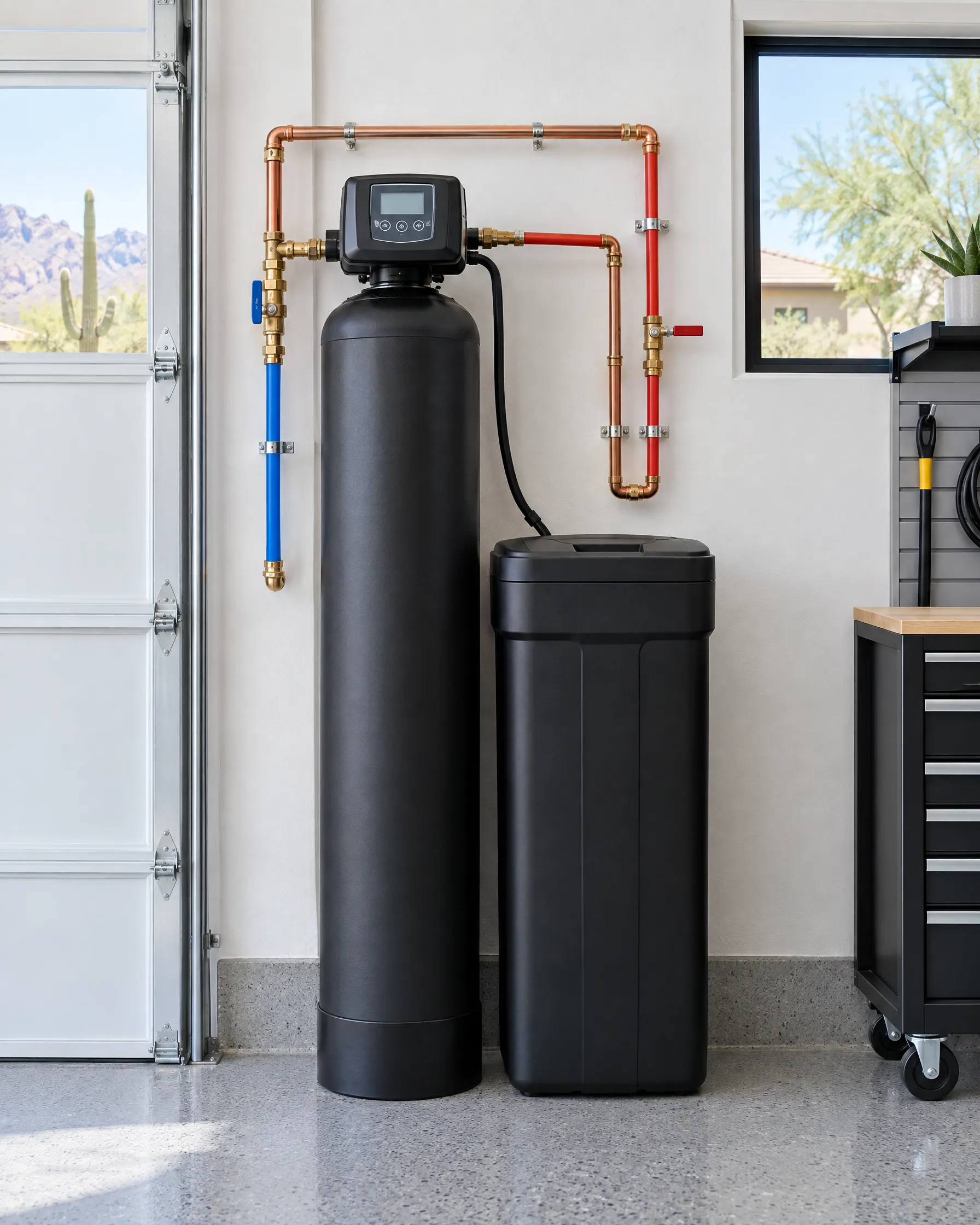 Water softener maintenance that keeps it running for yearsRegular maintenance keeps your softener working and helps it last. We check it, clean it and change what needs changing.Learn moreTime for a new water softener? We swap it in one visitIf your softener is old or failing, we remove it and install a new one sized for your home and water.Learn more
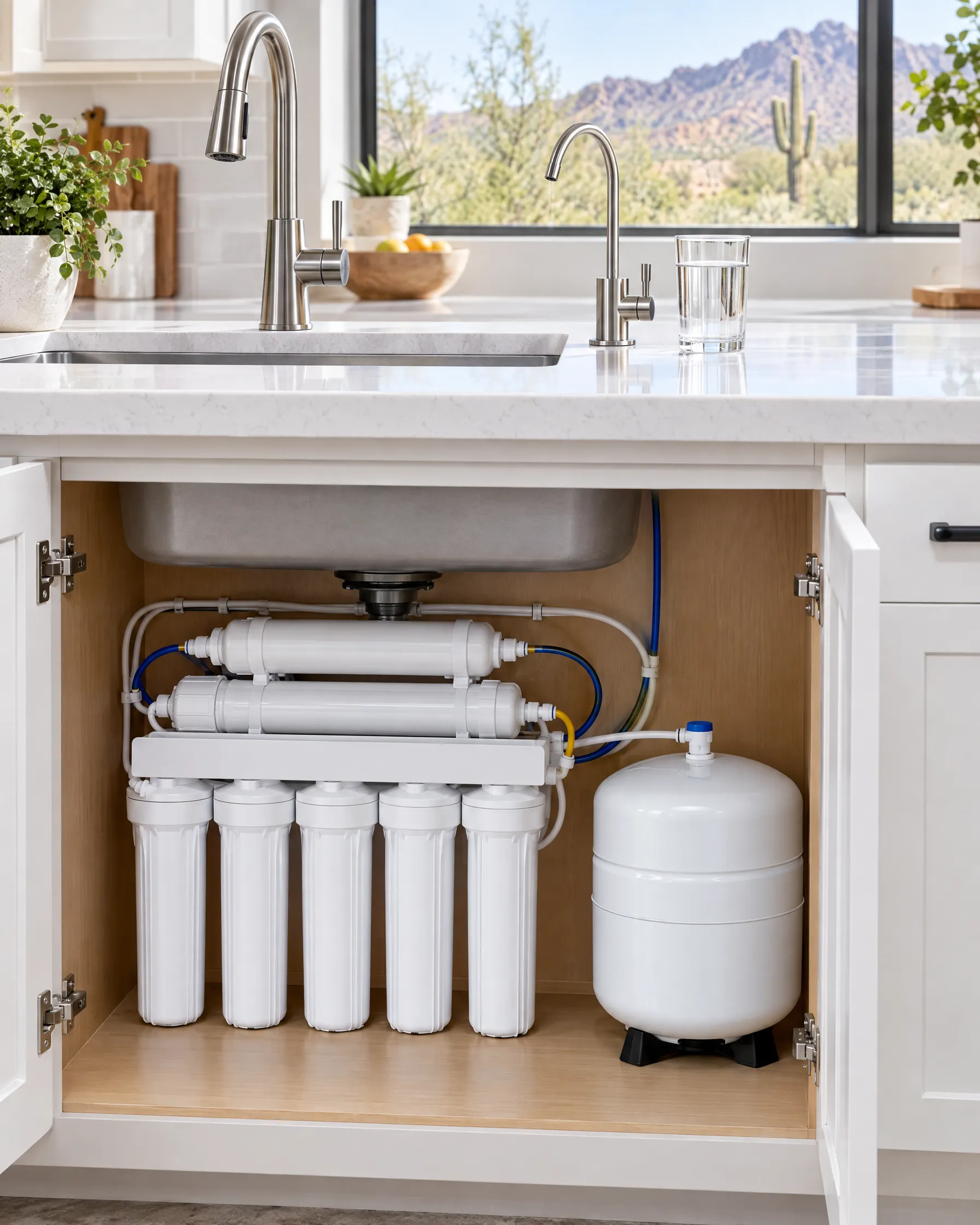 Don't want to change your filters? We'll do itPrefer not to swap filters yourself? Book a licensed plumber to change your RO, whole-house or Ultimate system filters.Learn more
 Never haul a bag of softener salt againSoftener salt delivered to your door on a schedule, so you never run out. [Confirm service area.]Learn more
Related Pages
Questions people ask
Why is my water softener full of water?
A few inches of water is normal. More than half full usually means a stuck float or a clogged line.
How do I know if my water softener is working?
Soap lathers easily, spots stop coming back, and the salt level drops over time. A hardness test strip should read near zero.
Why is my water hard again?
The usual causes: out of salt, a salt bridge, the bypass left on, or worn-out resin.
What is a salt bridge?
A hard crust of salt that forms above the water, so the salt never dissolves. Break it up gently with a broom handle.
How long does a water softener last?
Usually 10 to 15 years. Resin wears out faster on chlorinated water.
Do you repair all brands?
Yes, all major brands. [Confirm any exceptions.]
How much does water softener repair cost?
Service call [$X]. Parts are quoted before any work.
Should I repair or replace my water softener?
If it's over 10 years old or the repair costs more than half a new one, replacing usually saves money.