

Worried about lead in your water? How to check it and filter it
Lead usually comes from old pipes, not the plant.
Lead usually gets into water from old pipes and fixtures, not the treatment plant. Here's how to check and which filters are certified to reduce it.
- Plain English
- Certified fixes only
- Free water report
Want the answer for your home?
Tell us your ZIP code and a rep calls you within 5 minutes to answer every question. No pressure, no sales visit.
You're probably on this page because:
- You live in a home built before 1986
- You have kids or a baby at home
Lead is worth checking. Here's how.
Lead, by the numbers
- No safe level: the EPA's health goal for lead in drinking water is zero.
- 1986: when federal law banned lead pipes and solder in new plumbing.
Sources: EPA.
Where lead comes from
Old service lines, lead solder and some older faucets. City reports can't see inside your home.
What reduces lead
- Certified RO (NSF/ANSI 58)
- Certified carbon filters (NSF/ANSI 53 for lead)
How to test
Lead tests use the first water after it sits overnight. [Confirm if our lab tests lead.]
Life with it vs. without
| Without it | With it |
|---|---|
| Guessing what's in your water | Knowing, and fixing it |
Our take
Run the tap, but test anyway
After [thousands] of filtration systems sold, these are the questions customers ask us most:
Running the tap for 30 seconds to 2 minutes before drinking helps flush water that sat in the pipes. That's what utilities recommend. It helps, but it doesn't tell you what's there.
If your home is older, test, then filter drinking water with a system certified for lead. Many utilities now offer free lead service line checks too.
Written by people who install these every day
20+ years in water. No fluff, just how it really works.
- 20+ years in water
- Our own patents
- We supply other water companies
- [Thousands] of systems sold
- Licensed installers
Written by [Name], [title], [20+] years in water treatment. Reviewed by [Licensed plumber name], license # [#]. Last updated [date]. Sources: listed under each "By the numbers" block and linked in the copy
More Water Problems
 Arsenic in well waterArsenic occurs naturally in some groundwater, especially in private and small shared wells. Here's how to test for it and which filters reduce it.Learn more
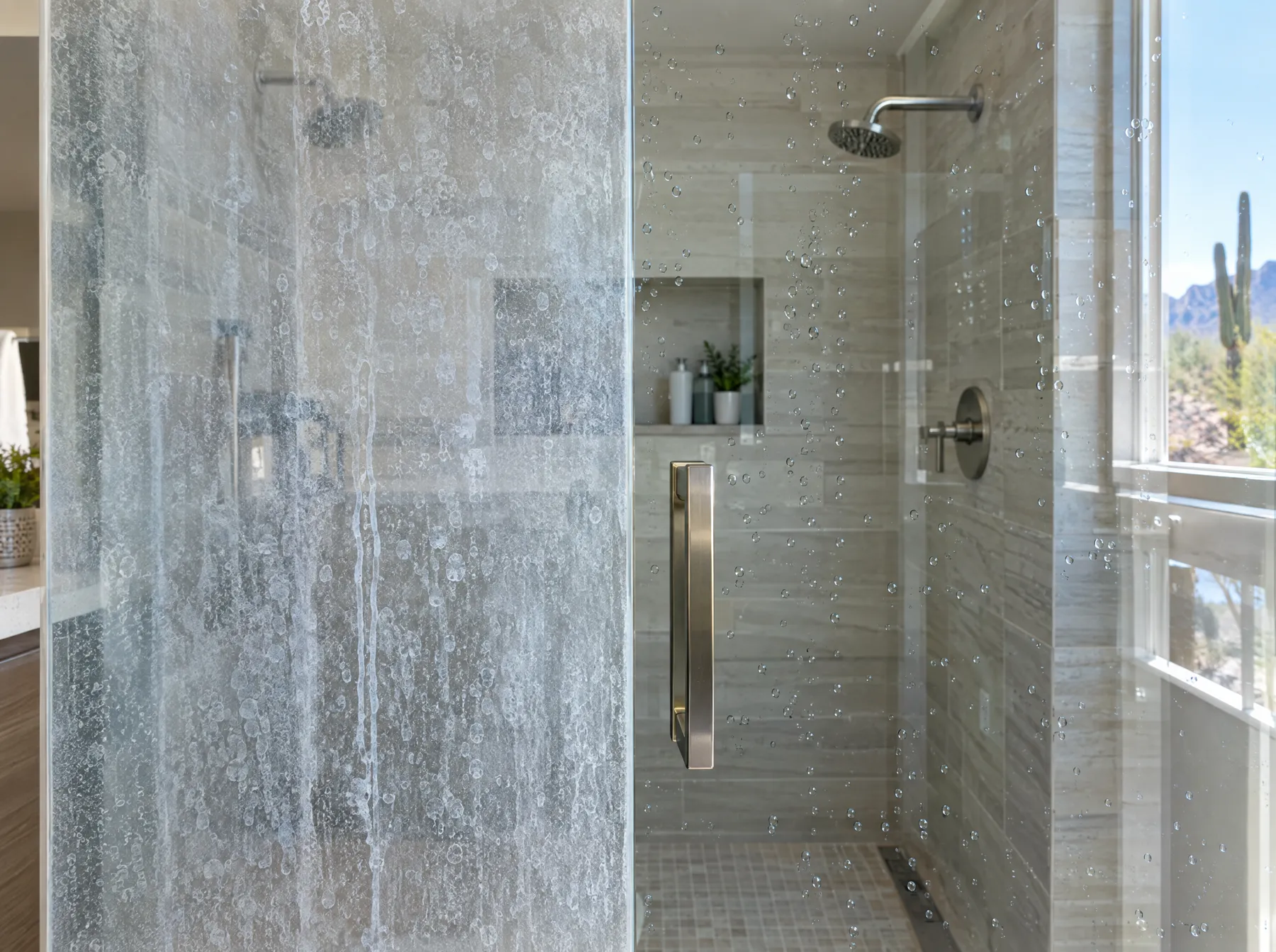 Hard water in the showerA shower filter reduces chlorine at the shower head, but only a whole-house softener removes hardness. Here's what each can do for your skin and hair.Learn moreHot water smells like rotten eggsIf only your hot water smells, the cause is usually inside the water heater: the anode rod reacts with bacteria in the tank and makes the gas. When we install your softener or water system, our plumber checks your anode rod and swaps it if needed, so the smell doesn't follow you. [Confirm whether the swap is included or quoted.]Learn more
 Microplastics in your tap waterTiny plastic particles have been found in tap and bottled water. Here's how they get there and which filters are built to catch them.Learn moreMost filters don't remove fluoride. These do.Most standard filters don't remove fluoride. Reverse osmosis is one of the few home systems that can. Here's what works.Learn moreNitrates in your well waterNitrates come from fertilizer and septic systems and mostly show up in well water. Here's how to test and what removes them.Learn more
Related Pages
Questions people ask
Does reverse osmosis remove lead?
Certified RO does.
How do I test for lead in my water?
First-draw sample after water sits overnight.
Does boiling remove lead?
No.
Does a softener remove lead?
Not reliably.
Is lead in city water?
Usually from home pipes, not the plant.
Do Brita filters remove lead?
Only certified models.