

Water smells like rotten eggs? Here's why, and how to fix it
It's usually hydrogen sulfide gas. Find the source in 1 minute.
That smell is usually hydrogen sulfide, a gas most common in well water. Here's how to find where it's coming from and get rid of it for good.
- Free well water test
- Licensed install
- 30-day money-back guarantee

Want the answer for your well?
Get a free well test, or tell us your ZIP and a rep calls you within 5 minutes to answer every question.
You're probably on this page because:
- Your shower smells like rotten eggs
- You're embarrassed when guests use the bathroom
- The orange stains in your tub come back no matter how much you scrub
It's fixable, and finding the cause takes 1 minute.
What well water problems look like
Orange stains. Iron in your water.
Black stains. Usually manganese.
Rotten-egg smell. Hydrogen sulfide gas.
Cloudy water. Sediment from the well.
Crusty fixtures. Hard well water.
See any of these? Get your well tested, free.
Well water, by the numbers
- About 43 million people in the US get their water from private wells, and nobody tests a private well but its owner.
- Once a year: how often the CDC recommends testing a private well.
- Nearly 2 in 3 people have never had their water tested.
Sources: CDC private well guidance; WQA 2025 Consumer Insights via WCP.
The 1-minute test
- Cold water smells too? It's your water. Most common with wells.
- Only hot water smells? It's your water heater. See the fix
- Only one sink? It's probably the drain, not the water.
What causes it
- Hydrogen sulfide gas in well water
- Sulfur bacteria in the well or pipes
- Your water heater's anode rod (hot water only)
Is it safe?
At the levels that cause the smell, it's usually a nuisance, not a health risk.
But it corrodes pipes and can point to bacteria. Test it.
How to fix it
| Cause | Fix |
|---|---|
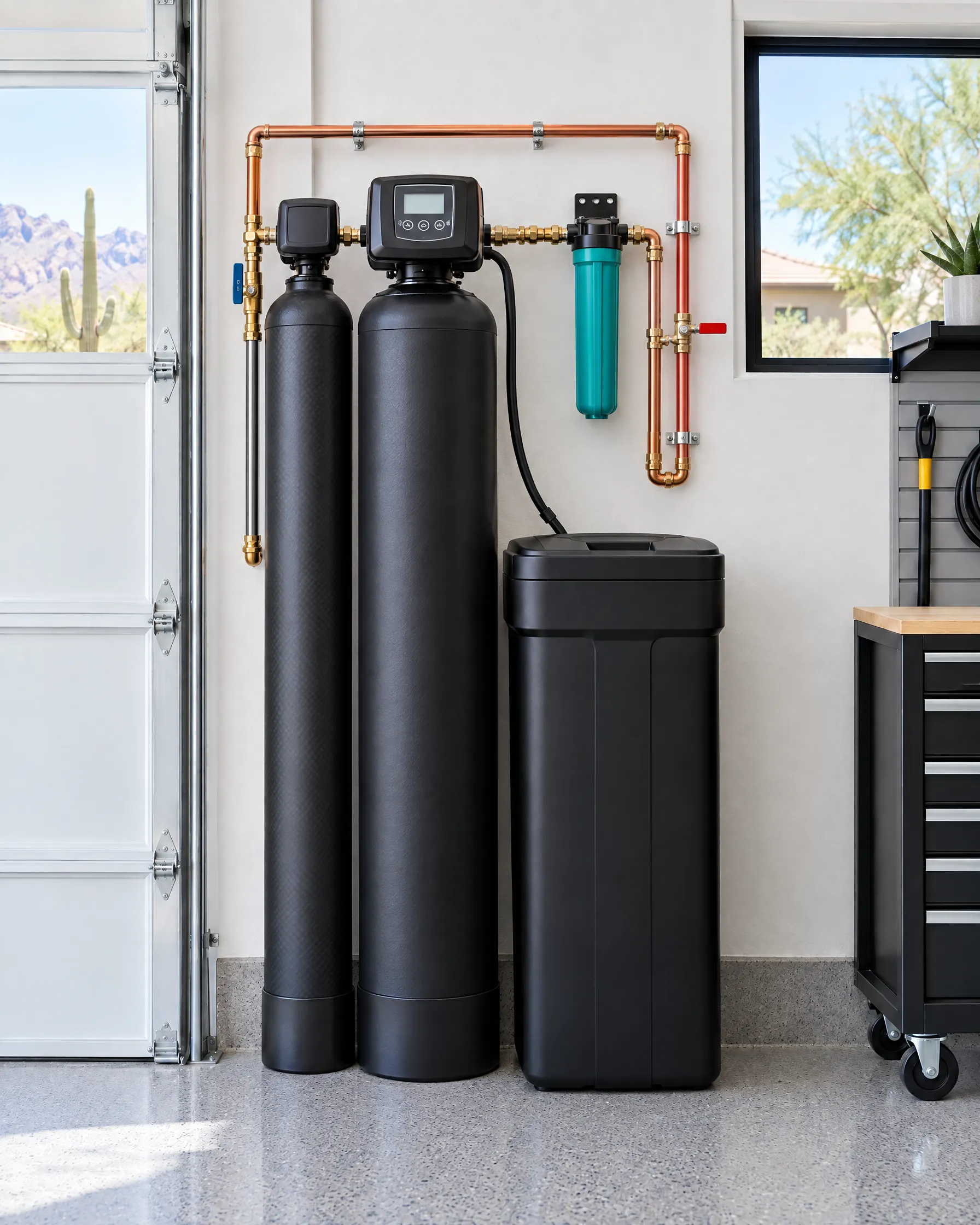
| Well water | Sulfur filter or our Well Water System |
| Water heater | New anode rod, checked on every install |
| Bacteria | Shock the well, add UV |
Our take
The water heater trick most people don't know
This is the stuff our customers ask us most, after 20+ years and [thousands] of systems sold.
Here's the most common rotten-egg mystery we see: the cold water smells fine, but the hot water stinks. That's almost always the water heater, not your water supply.
Most tank water heaters have a metal rod inside called an anode rod. It's there to protect the tank from rusting. But some water has bacteria that react with that rod and make hydrogen sulfide, the rotten-egg gas. It's harmless at those levels, but it's gross.
Things that make it worse: a water heater that sits unused, like after a vacation; a low temperature setting; and sometimes softened water, which can speed up the reaction.
The usual fixes: a plumber swaps the rod for a different type, like aluminum-zinc or a powered anode, and flushes the tank. That's why our plumbers check the anode rod on every softener install, so a new system never comes with a new smell.
If the cold water smells too, the gas is in your water supply, usually a well. That needs a sulfur filter, and a free well test tells you how strong it is.
20+ years fixing smelly water
Our own lab finds the cause, so you fix it the first time.
- 20+ years in water
- Our own patents
- We supply other water companies
- [Thousands] of systems sold
- Licensed installers
Written by [Name], [title], [20+] years in water treatment. Reviewed by [Licensed plumber name], license # [#]. Last updated [date]. Sources: listed under each "By the numbers" block and linked in the copy
More Water Problems
Arsenic in well waterArsenic occurs naturally in some groundwater, especially in private and small shared wells. Here's how to test for it and which filters reduce it.Learn more Hard water in the showerA shower filter reduces chlorine at the shower head, but only a whole-house softener removes hardness. Here's what each can do for your skin and hair.Learn more
 Hot water smells like rotten eggsIf only your hot water smells, the cause is usually inside the water heater: the anode rod reacts with bacteria in the tank and makes the gas. When we install your softener or water system, our plumber checks your anode rod and swaps it if needed, so the smell doesn't follow you. [Confirm whether the swap is included or quoted.]Learn more
 Microplastics in your tap waterTiny plastic particles have been found in tap and bottled water. Here's how they get there and which filters are built to catch them.Learn moreMost filters don't remove fluoride. These do.Most standard filters don't remove fluoride. Reverse osmosis is one of the few home systems that can. Here's what works.Learn moreNitrates in your well waterNitrates come from fertilizer and septic systems and mostly show up in well water. Here's how to test and what removes them.Learn more
Related Pages
Questions people ask
Why does my water smell like rotten eggs?
Usually hydrogen sulfide gas, most common in well water. If only the hot water smells, it's your water heater.
Why does only my hot water smell like rotten eggs?
The water heater's anode rod reacts with bacteria in the tank and makes the gas. A different anode rod usually fixes it.
Is sulfur water safe to drink?
At the levels that cause a smell, it's usually not a health risk, but test it to rule out bacteria.
Can I shower in water that smells like sulfur?
Usually yes, but the smell can be strong in a closed bathroom. Fixing it at the source is the real answer.
Why does my well water suddenly smell like rotten eggs?
Bacteria in the well or a change in the water table are common causes. Test it to know for sure.
How do I get rid of the sulfur smell in well water?
A sulfur filter that oxidizes the gas, or our Well Water System, which handles sulfur, iron and hardness together.
Will a water softener remove the sulfur smell?
No. A softener can even make the hot water smell worse through the water heater's anode rod. That's why our plumbers check the anode rod on every install.
Why does only one sink smell like rotten eggs?
That's usually the drain, not the water. Bacteria build up in the pipe under the sink.