

San Antonio Water System · serves 1,999,472 people
Tap Water Quality in San Antonio, TX 78205
San Antonio Water System's own testing found 15 contaminants above EWG's health guidelines, led by Haloacetic acids (HAA9) at 161x, Total trihalomethanes (TTHMs) at 152x, Bromochloroacetic acid at 106x. Here's every one, what it does, and what takes it out.
The numbers
Above EWG health guidelines
15
contaminants
Other contaminants detected
23
under the guideline
Tested for, not found
194
chemicals
People served
1,999,472
San Antonio Water System
Met federal legal limits in the latest quarter the EPA assessed (April 2024 - June 2024). Legal doesn't mean the water meets today's health guidelines: most legal limits haven't moved in about 20 years, and many of these chemicals have none. Bexar County, TX.
Contaminants Above EWG's Health Guidelines
Detected in 2021-2023 at annual averages over the level a public health authority considers safe. Most have no legal limit at all.
Haloacetic acids (HAA9)
cancer161xEWG guideline
- This utility
- 9.67 ppb
- EWG guideline
- 0.06 ppb
- Legal limit
- None
- Activated carbon
- Reverse osmosis
State avg 23.9 ppb · US avg 23.7 ppb
What is this contaminant?About this contaminant
Haloacetic acids are formed when disinfectants such as chlorine are added to tap water. The group of nine haloacetic acids includes monochloroacetic acid, dichloroacetic acid, trichloroacetic acid, monobromoacetic acid and dibromoacetic acid, which are regulated as a group by the federal government (HAA5); and bromochloroacetic acid, bromodichloroacetic acid, chlorodibromoacetic acid, and tribromoacetic acid.
Where it comes from: treatment byproducts.
Total trihalomethanes (TTHMs)
cancer152xEWG guideline
- This utility
- 22.9 ppb
- EWG guideline
- 0.15 ppb
- Legal limit
- 80 ppb
- Activated carbon
- Reverse osmosis
State avg 25.6 ppb · US avg 29.1 ppb
What is this contaminant?About this contaminant
Trihalomethanes are cancer-causing contaminants that form during water treatment with chlorine and other disinfectants. The total trihalomethanes group includes four chemicals: chloroform, bromodichloromethane, dibromochloromethane and bromoform.
Where it comes from: treatment byproducts.
Bromochloroacetic acid
106xEWG guideline
- This utility
- 2.12 ppb
- EWG guideline
- 0.02 ppb
- Legal limit
- None
- Activated carbon
- Reverse osmosis
State avg 3.82 ppb · US avg 2.8 ppb
What is this contaminant?About this contaminant
Bromochloroacetic acid is formed when chlorine or other disinfectants are used to treat drinking water. Bromochloroacetic acid and other disinfection byproducts increase the risk of cancer and may cause problems during pregnancy.
Where it comes from: treatment byproducts.
Dibromoacetic acid
80xEWG guideline
- This utility
- 2.41 ppb
- EWG guideline
- 0.03 ppb
- Legal limit
- None
- Activated carbon
- Reverse osmosis
State avg 2.64 ppb · US avg 1.13 ppb
What is this contaminant?About this contaminant
Dibromoacetic acid, one of the group of five haloacetic acids regulated by federal standards, is formed when chlorine or other disinfectants are used to treat drinking water. Haloacetic acids and other disinfection byproducts increase the risk of cancer and may cause problems during pregnancy. Click here to read more about disinfection byproducts.
Where it comes from: treatment byproducts.
Bromodichloromethane
cancer74xEWG guideline
- This utility
- 4.42 ppb
- EWG guideline
- 0.06 ppb
- Legal limit
- None
- Activated carbon
- Reverse osmosis
State avg 6.5 ppb · US avg 5.89 ppb
What is this contaminant?About this contaminant
Bromodichloromethane, one of the total trihalomethanes (TTHMs), is formed when chlorine or other disinfectants are used to treat drinking water. Bromodichloromethane and other disinfection byproducts increase the risk of cancer and may cause problems during pregnancy. Click here to read more about disinfection byproducts.
Where it comes from: treatment byproducts.
Haloacetic acids (HAA5)
cancer58xEWG guideline
- This utility
- 5.76 ppb
- EWG guideline
- 0.1 ppb
- Legal limit
- 60 ppb
- Activated carbon
- Reverse osmosis
State avg 12.5 ppb · US avg 19.8 ppb
What is this contaminant?About this contaminant
Haloacetic acids are formed when disinfectants such as chlorine are added to tap water. The group of five haloacetic acids regulated by federal standards includes monochloroacetic acid, dichloroacetic acid, trichloroacetic acid, monobromoacetic acid and dibromoacetic acid.
Where it comes from: treatment byproducts.
Dibromochloromethane
cancer55xEWG guideline
- This utility
- 5.55 ppb
- EWG guideline
- 0.1 ppb
- Legal limit
- None
- Activated carbon
- Reverse osmosis
State avg 5.95 ppb · US avg 3.55 ppb
What is this contaminant?About this contaminant
Dibromochloromethane, one of the total trihalomethanes (TTHMs), is formed when chlorine or other disinfectants are used to treat drinking water. Dibromochloromethane and other disinfection byproducts increase the risk of cancer and may cause problems during pregnancy. Click here to read more about disinfection byproducts.
Where it comes from: treatment byproducts.
Nitrate and nitrite
cancer14xEWG guideline
- This utility
- 2.01 ppm
- EWG guideline
- 0.14 ppm
- Legal limit
- 10 ppm
- Ion exchange
- Reverse osmosis
State avg 0.591 ppm · US avg 0.78 ppm
What is this contaminant?About this contaminant
Nitrate and nitrite enter water from fertilizer runoff, septic tanks and urban runoff. These contaminants can cause oxygen deprivation for infants and increase the risk of cancer. Nitrite is significantly more toxic than nitrate. Click here to read more about nitrate.
Where it comes from: agriculture, runoff & sprawl, naturally occurring.
Dichloroacetic acid
cancer10xEWG guideline
- This utility
- 2.05 ppb
- EWG guideline
- 0.2 ppb
- Legal limit
- None
- Activated carbon
- Reverse osmosis
State avg 6.77 ppb · US avg 8 ppb
What is this contaminant?About this contaminant
Dichloroacetic acid, one of the group of five haloacetic acids regulated by federal standards, is formed when chlorine or other disinfectants are used to treat drinking water. Haloacetic acids and other disinfection byproducts increase the risk of cancer and may cause problems during pregnancy. Click here to read more about disinfection byproducts.
Where it comes from: treatment byproducts.
Nitrate
cancer10xEWG guideline
- This utility
- 1.42 ppm
- EWG guideline
- 0.14 ppm
- Legal limit
- 10 ppm
- Ion exchange
- Reverse osmosis
State avg 0.525 ppm · US avg 0.824 ppm
What is this contaminant?About this contaminant
Nitrate, a fertilizer chemical, frequently contaminates drinking water due to agricultural and urban runoff, and discharges from municipal wastewater treatment plants and septic tanks. Excessive nitrate in water can cause oxygen deprivation in infants and increase the risk of cancer. Click here to read more about nitrate.
Where it comes from: agriculture, runoff & sprawl, naturally occurring.
Chloroform
cancer7xEWG guideline
- This utility
- 2.82 ppb
- EWG guideline
- 0.4 ppb
- Legal limit
- None
- Activated carbon
- Reverse osmosis
State avg 7.52 ppb · US avg 16.2 ppb
What is this contaminant?About this contaminant
Chloroform, one of the total trihalomethanes (TTHMs), is formed when chlorine or other disinfectants are used to treat drinking water. Chloroform and other disinfection byproducts increase the risk of cancer and may cause problems during pregnancy.
Where it comes from: treatment byproducts.
Chromium (hexavalent)
cancer6.8xEWG guideline
- This utility
- 0.136 ppb
- EWG guideline
- 0.02 ppb
- Legal limit
- None
- Ion exchange
- Reverse osmosis
State avg 0.32 ppb · US avg 0.44 ppb
What is this contaminant?About this contaminant
Chromium (hexavalent) is a carcinogen that commonly contaminates American drinking water. Chromium (hexavalent) in drinking water may be due to industrial pollution or natural occurrences in mineral deposits and groundwater. Read more about chromium (hexavalent).
Where it comes from: industry, naturally occurring.
Radium, combined (-226 and -228)
cancer6.8xEWG guideline
- This utility
- 0.34 pCi/L
- EWG guideline
- 0.05 pCi/L
- Legal limit
- 5 pCi/L
- Ion exchange
- Reverse osmosis
State avg 0.37 pCi/L · US avg 0.33 pCi/L
What is this contaminant?About this contaminant
Radium is a radioactive element that causes bone cancer and other cancers. It can occur naturally in groundwater, and oil and gas extraction activities such as hydraulic fracturing can elevate concentrations.
Where it comes from: industry, naturally occurring.
Bromoform
cancer5.9xEWG guideline
- This utility
- 2.95 ppb
- EWG guideline
- 0.5 ppb
- Legal limit
- None
- Activated carbon
- Reverse osmosis
State avg 3.34 ppb · US avg 1.44 ppb
What is this contaminant?About this contaminant
Bromoform, one of the total trihalomethanes (TTHMs), is formed when chlorine or other disinfectants are used to treat drinking water. Bromoform and other disinfection byproducts increase the risk of cancer and may cause problems during pregnancy. Click here to read more about disinfection byproducts.
Where it comes from: treatment byproducts.
Trichloroacetic acid
cancer4.3xEWG guideline
- This utility
- 0.428 ppb
- EWG guideline
- 0.1 ppb
- Legal limit
- None
- Activated carbon
- Reverse osmosis
State avg 2.14 ppb · US avg 6.57 ppb
What is this contaminant?About this contaminant
Trichloroacetic acid, one of the group of five haloacetic acids regulated by federal standards, is formed when chlorine or other disinfectants are used to treat drinking water. Haloacetic acids and other disinfection byproducts increase the risk of cancer and may cause problems during pregnancy. Click here to read more about disinfection byproducts.
Where it comes from: treatment byproducts.
What Takes It Out
EWG lists which home filter technologies reduce each contaminant. Counted against this utility's report:
Reverse osmosis
15 of 15
contaminants above the guideline, plus 20 other detected. Reverse osmosis is the drinking water system under the sink.
Reverse OsmosisActivated carbon
11 of 15
contaminants above the guideline, plus 9 other detected. Activated carbon is the whole-house filter on the main line.
Whole-House FiltrationIon exchange
4 of 15
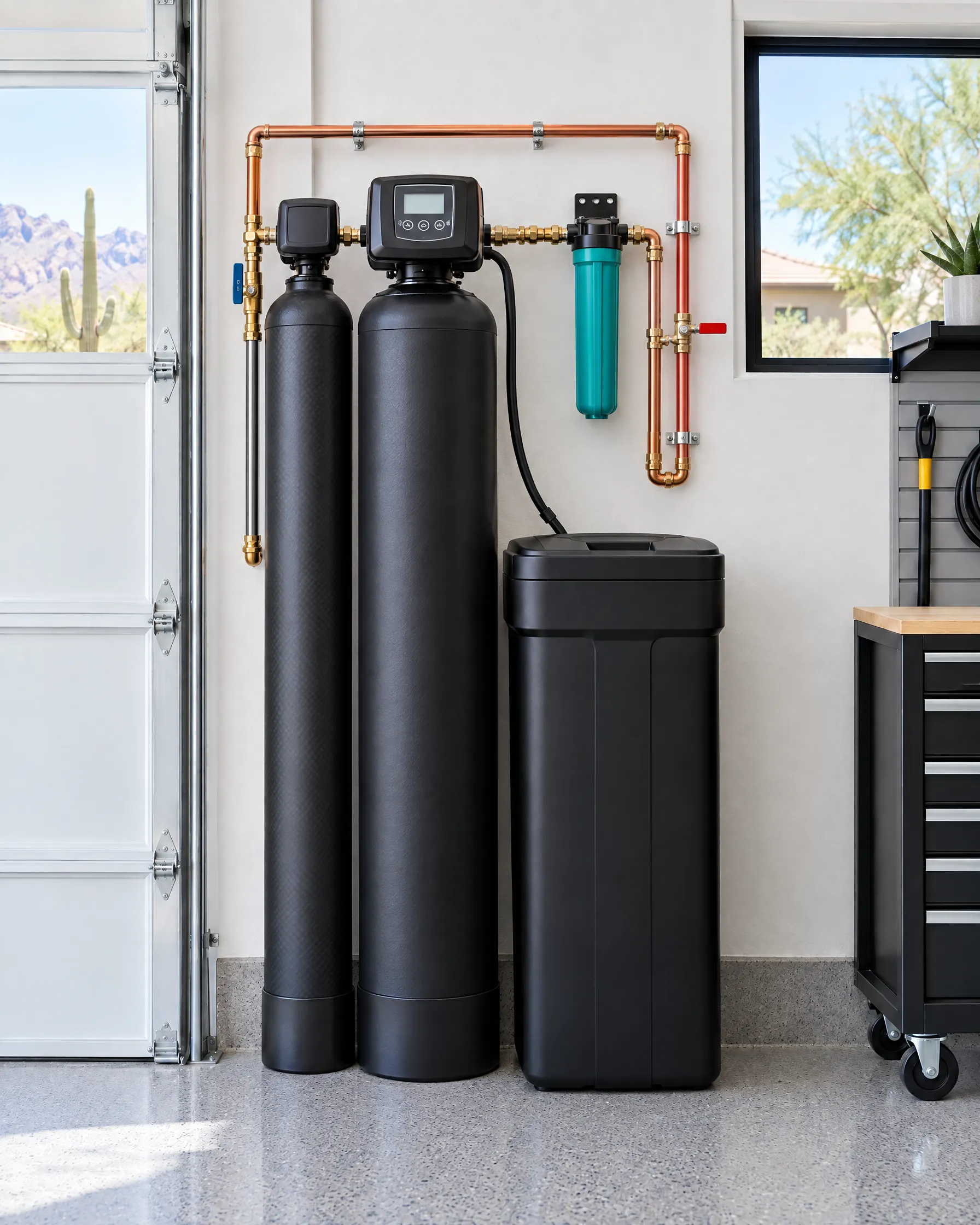
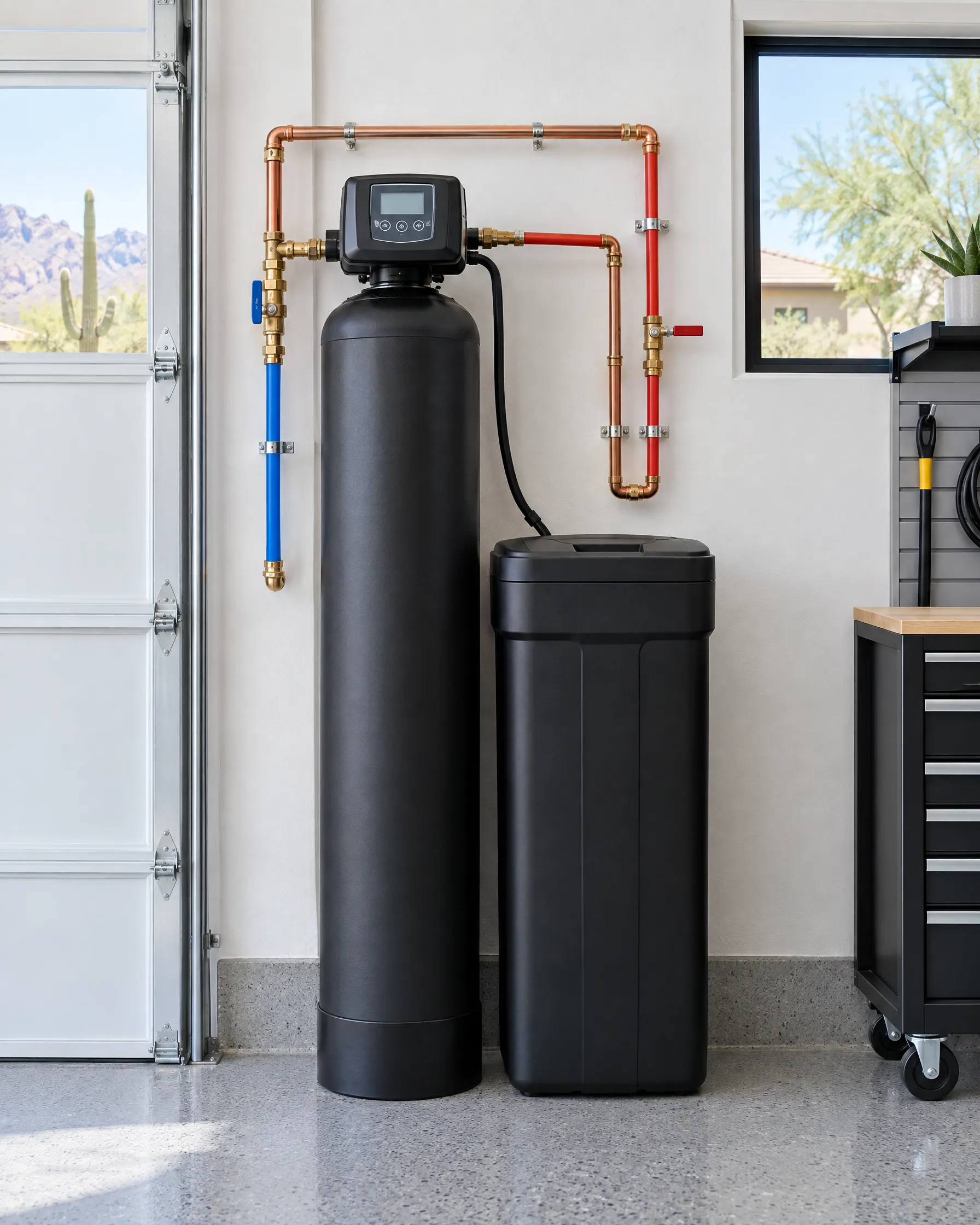
contaminants above the guideline. Ion exchange is what a water softener does; it also takes out the hardness that scales your fixtures.
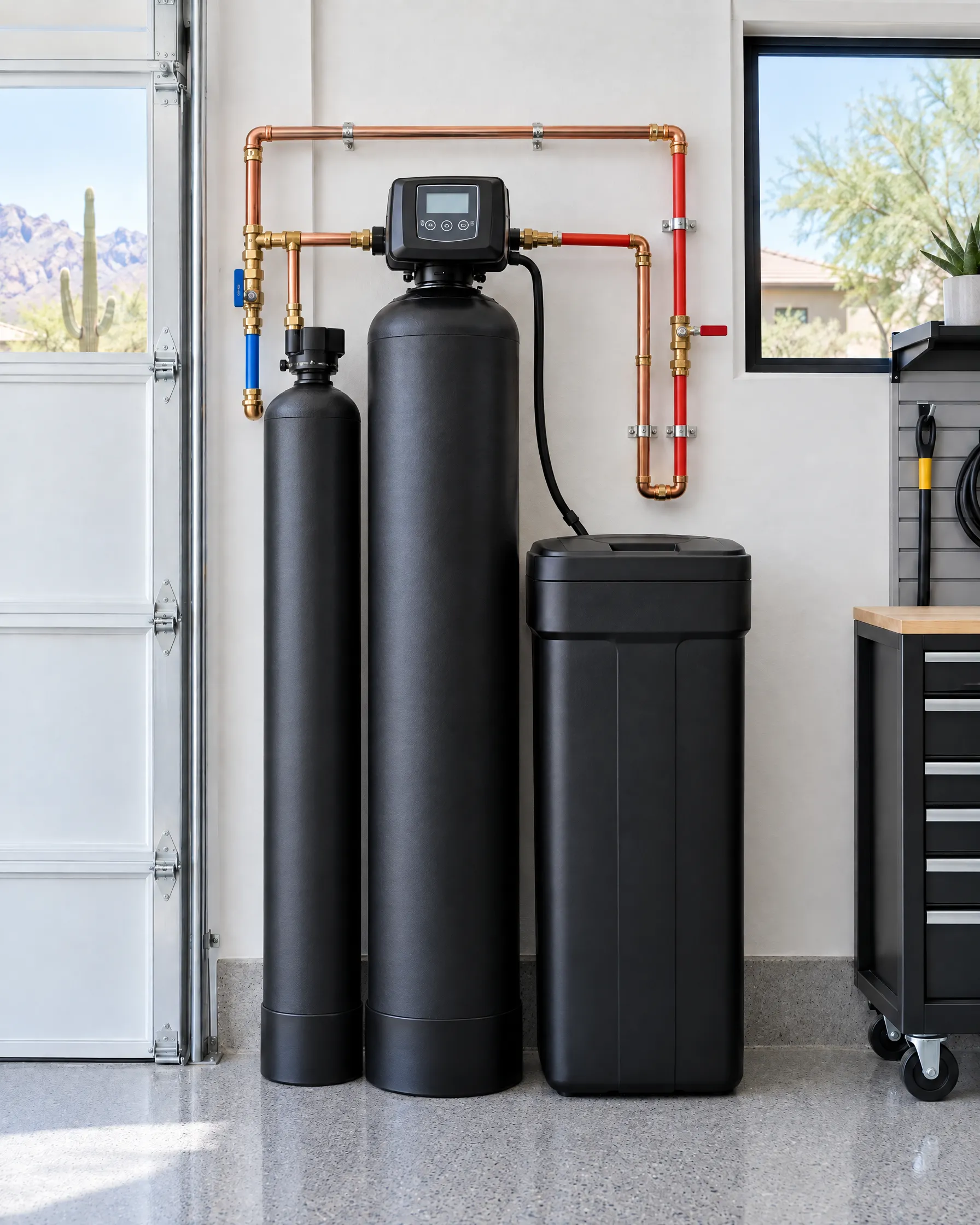
Water SoftenersA complete system stacks all three: carbon on the main line, a softener, and reverse osmosis at the kitchen sink. One flat price, installed by a licensed plumber near you.
Get my priceOther Contaminants Detected
Found in the water, under EWG's guideline. Shown as a share of the guideline so you can see what's close.
| Contaminant | This utility | Of the guideline | Legal limit | What filters it |
|---|---|---|---|---|
| Thallium | 0.0500 ppb | 50% of 0.1 ppb | 2 ppb | Ion exchange, Reverse osmosis |
| Uranium | 0.14 pCi/L | 33% of 0.43 pCi/L | 20 pCi/L | Ion exchange, Reverse osmosis |
| Vanadium | 2.72 ppb | 13% of 21 ppb | None | Ion exchange |
| Fluoride | 0.426 ppm | 11% of the legal limit | 4 ppm | Reverse osmosis |
| Barium | 62.0 ppb | 9% of 700 ppb | 2,000 ppb | Ion exchange, Reverse osmosis |
| Chlorate | 6.27 ppb | 3% of 210 ppb | None | Activated carbon, Reverse osmosis, Ion exchange |
| Molybdenum | 1.04 ppb | 3% of 40 ppb | None | Ion exchange, Reverse osmosis |
| 1,4-Dioxane | 0.00829 ppb | 2% of 0.35 ppb | None | Reverse osmosis |
| Selenium | 0.1000 ppb | 0% of 30 ppb | 50 ppb | Reverse osmosis |
| Manganese | 0.299 ppb | 0% of 100 ppb | None | Ion exchange |
| Chromium (total) | 0.243 ppb | 0% of the legal limit | 100 ppb | Ion exchange, Reverse osmosis |
| Monochloroacetic acid | 0.0921 ppb | 0% of 53 ppb | None | Activated carbon, Reverse osmosis |
| Monobromoacetic acid | 0.0277 ppb | 0% of 25 ppb | None | Activated carbon, Reverse osmosis |
| Strontium | 0.806 ppb | 0% of 1,500 ppb | None | Ion exchange, Reverse osmosis |
| Perfluorobutanoic Acid (PFBA) | 0.536 ppt | 0% of 1,000 ppt | None | Activated carbon, Reverse osmosis |
| Cobalt | 0.00690 ppb | 0% of 70 ppb | None | Ion exchange, Reverse osmosis |
| Perfluoropentanoic Acid (PFPeA) | 0.0760 ppt | 0% of 1,000 ppt | None | Activated carbon, Reverse osmosis |
| Perfluorobutane sulfonate (PFBS) | 0.0880 ppt | 0% of 2,000 ppt | None | Activated carbon, Reverse osmosis |
| Xylenes (total) | 0.0123 ppb | 0% of 1,800 ppb | 10,000 ppb | Activated carbon, Reverse osmosis |
| 2-methyl-1-propene | 5.00 ppb | No guideline | None | Activated carbon, Reverse osmosis |
| Hexadecanoic acid | 3.91 ppb | No guideline | None | Activated carbon, Reverse osmosis |
| Lithium | 9.45 ppb | No guideline | None | Ion exchange, Reverse osmosis |
| Octadecanoic acid | 6.15 ppb | No guideline | None | Activated carbon, Reverse osmosis |
194 chemicals tested for and not foundShow the listHide
1,1,1,2-Tetrachloroethane, 1,1,1-Trichloroethane, 1,1,2,2-Tetrachloroethane, 1,1,2-Trichloroethane, 1,1-Dichloroethane, 1,1-Dichloroethylene, 1,1-Dichloropropene, 1,2,3-Trichlorobenzene, 1,2,3-Trichloropropane, 1,2,4-Trichlorobenzene, 1,2,4-Trimethylbenzene, 1,2-Dibromo-3-chloropropane (DBCP), 1,2-Dichloroethane, 1,2-Dichloropropane, 1,3,5-Trimethylbenzene, 1,3-Butadiene, 1,3-Dichloropropane, 1-butanol, 11-chloroeicosafluoro-3-oxaundecane-1-sulfonic aci, 17-beta-Estradiol, 2,2-Dichloropropane, 2,3-Dichlorobiphenyl, 2,4,5-T, 2,4,5-TP (Silvex), 2,4,5-Trichlorobiphenyl, 2,4-DB, 2-Chlorobiphenyl, 2-Hexanone, 2-methoxyethanol, 2-propen-1-ol, 22'3'46-Pentachlorobiphenyl, 22'33'44'6-Heptachlorobiphenyl, 22'33'45'66'-Octachlorobiphenyl, 22'44'-Tetrachlorobiphenyl, 22'44'56'-Hexachlorobiphenyl, 3,5-Dichlorobenzoic acid, 3-Hydroxycarbofuran, 4,8-dioxa-3H-perfluorononanoic acid (ADONA), 4-Androstene-3,17-dione, 4:2 Fluorotelomer Sulfonic Acid (4:2 FTSA), 6:2 Fluorotelomer Sulfonic Acid (6:2 FTSA), 8:2 Fluorotelomer Sulfonic Acid (8:2 FTSA), 9-chlorohexadecafluoro-3-oxanone-1-sulfonic acid (, Acenaphthene, Acenaphthylene, Acifluorfen (Blazer), Acrylonitrile, Alachlor (Lasso), Aldicarb, Aldicarb sulfone, Aldicarb sulfoxide, Aldrin, alpha-Chlordane, Alpha-hexachlorocyclohexane, Aluminum, Anthracene, Antimony, Arsenic, Asbestos, Atrazine, Baygon (Propoxur), Bentazon (Basagran), Benzene, Benzo[a]anthracene, Benzo[a]pyrene, Benzo[b]fluoranthene, Benzo[g,h,i]perylene, Benzo[k]fluoranthene, Beryllium, Bromacil, Bromobenzene, Bromochloromethane, Bromomethane, Butachlor, Butanoic acid, 2,2,3,3,4,4-hexafluoro-4-(trifluoro, Butyl benzyl phthalate, Butylated hydroxyanisole, Cadmium, Carbaryl, Carbofuran, Carbon tetrachloride, Chloramben, Chlordane, Chlorodifluoromethane, Chloroethane, Chloromethane, Chlorpyriphos, Chrysene, cis-1,2-Dichloroethylene, cis-1,3-Dichloropropene, Cyanide, Dalapon, Di(2-ethylhexyl) adipate, Di-n-butyl phthalate, Dibenz[a,h]anthracene, Dibromomethane, Dicamba, Dichlorodifluoromethane, Dichloromethane (methylene chloride), Dichlorprop, Dieldrin, Diethyl phthalate, Dimethipin, Dimethyl phthalate, Dinoseb, Endrin, Equilin, Estriol, Estrone, Ethinyl estradiol, Ethoprop, Ethyl methacrylate, Ethylene dibromide, Fluorene, gamma-Chlordane, Germanium, Heptachlor, Heptachlor epoxide, Hexachlorobenzene (HCB), Hexachlorobutadiene, Hexachlorocyclopentadiene, Hexafluoropropylene oxide dimer acid (HFPO-DA), Indeno[1,2,3-cd]pyrene, Iodomethane, Isopropylbenzene, Lindane, m-Dichlorobenzene, Mercury (inorganic), Methiocarb, Methomyl, Methoxychlor, Methyl isobutyl ketone, Methyl methacrylate, Metolachlor, Metribuzin, Monochlorobenzene (chlorobenzene), MTBE, n-Butylbenzene, N-ethyl perfluorooctane sulfonamido acetic acid (N, N-methyl perfluorooctanesulfonamidoacetic acid, n-Propylbenzene, Naphthalene, Nitrite, Nonafluoro-3,6-dioxaheptanoic acid, o-Chlorotoluene, o-Dichlorobenzene, o-toluidine, Oxamyl (Vydate), Oxyflurofen, p-Chlorotoluene, p-Dichlorobenzene, p-Isopropyltoluene, Pentachlorophenol, Perfluoro(2-ethoxyethane)sulfonic acid, Perfluorodecanoic acid (PFDA), Perfluorododecanoic acid (PFDoA), Perfluoroheptane sulfonic acid (PFHpS), Perfluoroheptanoic acid (PFHPA), Perfluorohexane sulfonate (PFHXS), Perfluorohexanoic Acid (PFHxA), Perfluorononanoic acid (PFNA), Perfluorooctane sulfonate (PFOS), Perfluorooctanoic acid (PFOA), Perfluoropentane sulfonic acid (PFPeS), Perfluorotetradecanoic acid (PFTA), Perfluorotridecanoic acid (PFTrDA), Perfluoroundecanoic acid (PFUnA), Permethrin, Phenanthrene, Picloram, Polychlorinated biphenyls (PCBs), Profenofos, Propachlor, Propanoic acid, 2,2,3,3-tetrafluoro-3-(trifluorome, Pyrene, Quinclorac, Quinoline, sec-Butylbenzene, Silver, Simazine, Styrene, Tebuconazole, tert-Butylbenzene, Testosterone, Toluene, Toxaphene, trans-1,2-Dichloroethylene, trans-1,3-Dichloropropene, trans-Nonachlor, Tribufos, Trichloroethylene, Trichlorofluoromethane, Trifluralin, Vinyl chloride.
Check Another ZIP Code
Every US water utility's report, by ZIP.
We install in San Antonio. Water softener installation in San Antonio, TX
Source: the EWG Tap Water Database, built from San Antonio Water System's own testing in 2021-2023, as reported to the state and the EPA. Legal limits are federal (or state) maximums; health guidelines are the levels EWG's scientists consider protective, usually set by a state or federal public health authority. “Times over” compares the utility's annual average with the guideline. Last pulled October 2026.Hardness isn't in EWG's data; ours is an area estimate.
Your utility's own test results, from the EWG Tap Water Database: what's in the water, how it compares with health guidelines, and what takes it out.
Want the Answer for Your Home?
Tell us your ZIP code and a rep calls you within 5 minutes to answer every question. No pressure, no sales visit.